| Year | 2025 |
|---|---|
| Location | Yumeshimanaka, Osaka, Japan |
| Application | Paths and steps, Gardens and Landscape |
| Project | Foster + Partners |
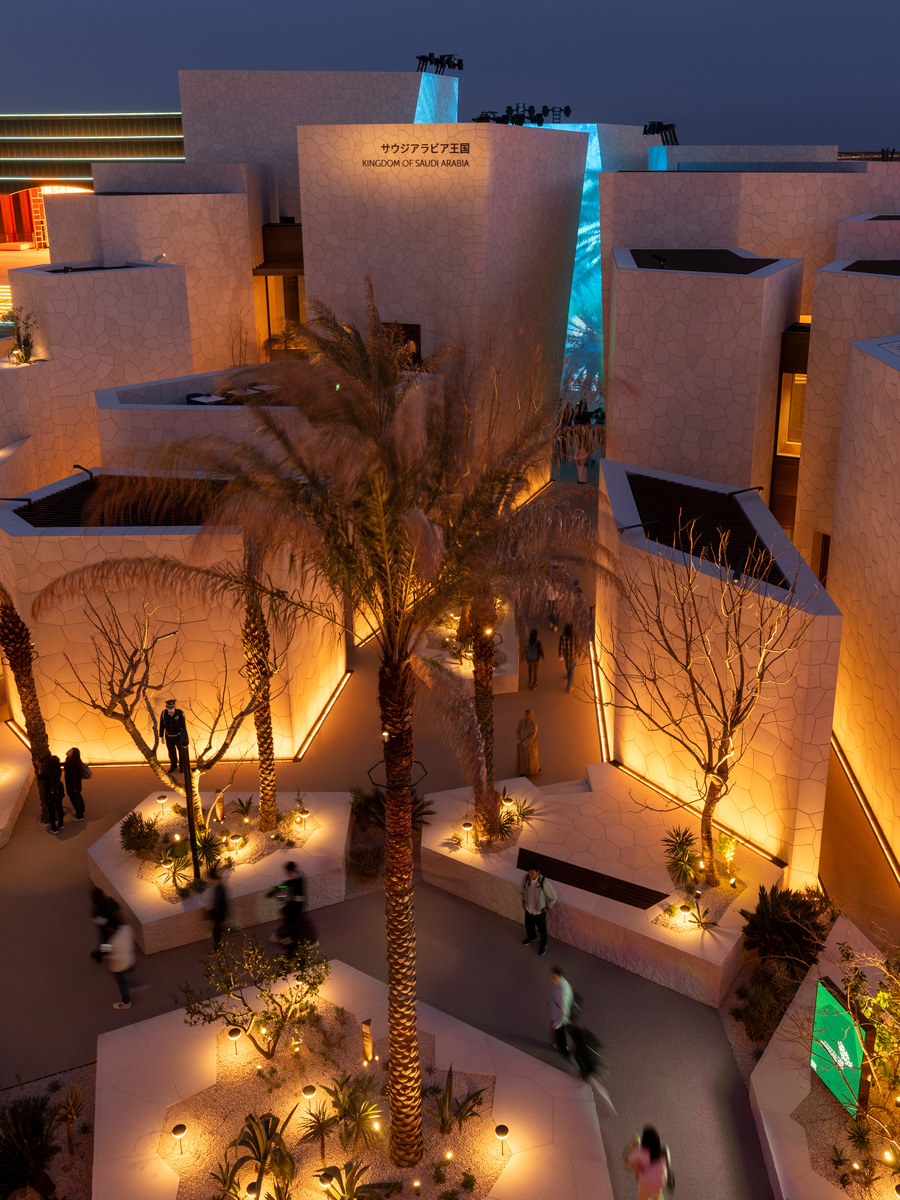
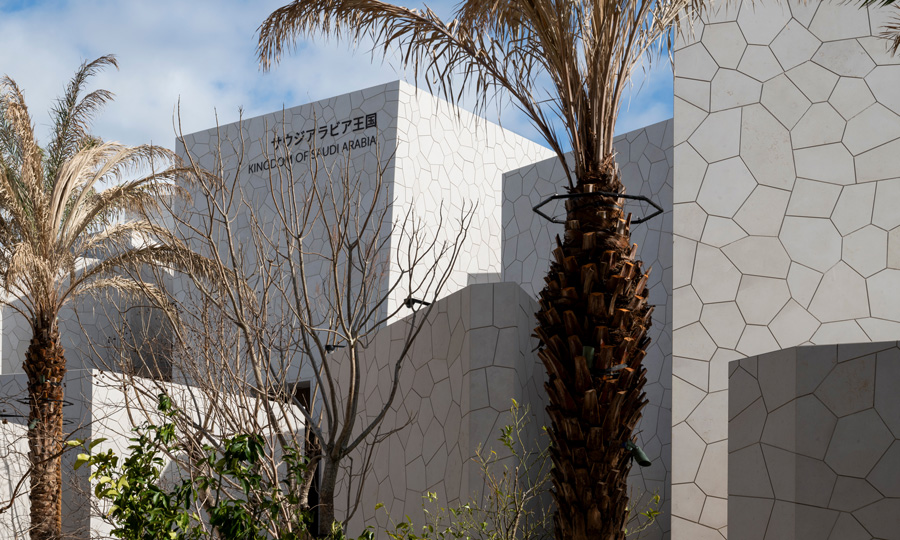
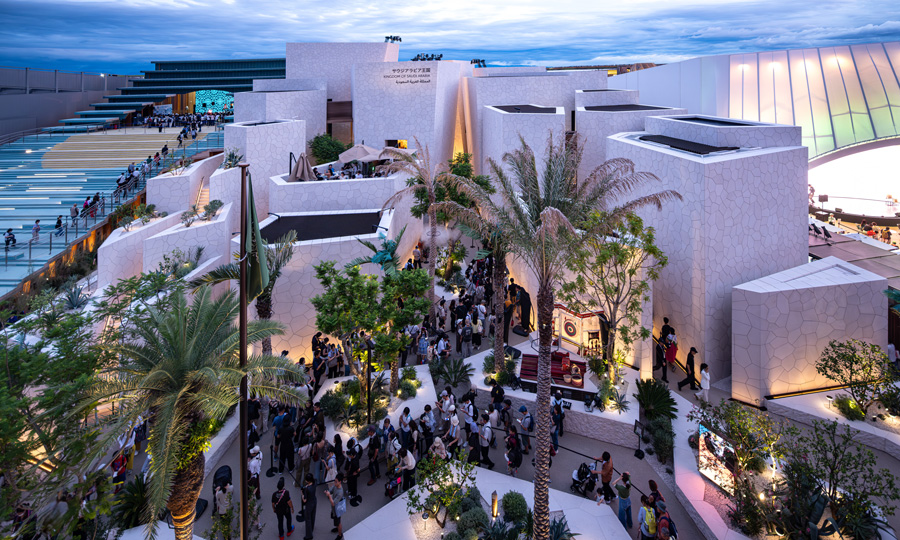
In Osaka, on the artificial island of Yumeshima, the Saudi Arabia Pavilion for Expo 2025, designed by Foster + Partners, takes the form of an immersive architectural system in which space, landscape and perception are continuously intertwined.
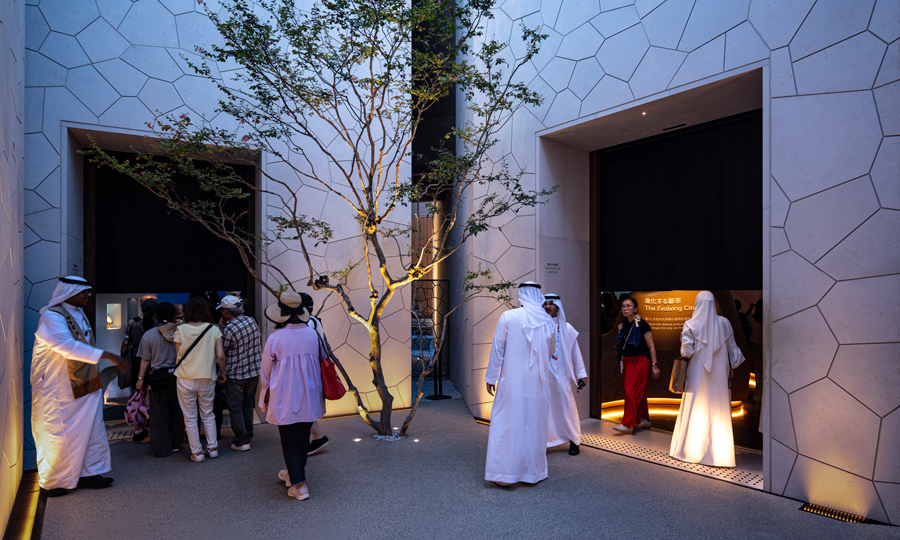
Inspired by traditional Saudi villages, the design unfolds as a sequence of narrow streets, courtyards and shaded squares, guiding visitors through a many-layered experience that engages every sense. At its heart, the Saudi Courtyard becomes a dynamic focal point: a place for quiet reflection during the day and a venue for events and performances in the evening hours.
In this context, light plays a fundamental role in shaping the night-time scene. The lighting design, developed in close alignment with the London-based architecture firm’s approach, enhances the legibility of the spaces, guiding movement and reinforcing the dialogue between architecture and vegetation.
The outdoor lighting is designed to integrate unobtrusively into the environment, with a carefully controlled luminous flux and particular attention paid to visual comfort. Never intrusive, the light guides and elevates, establishing hierarchies.
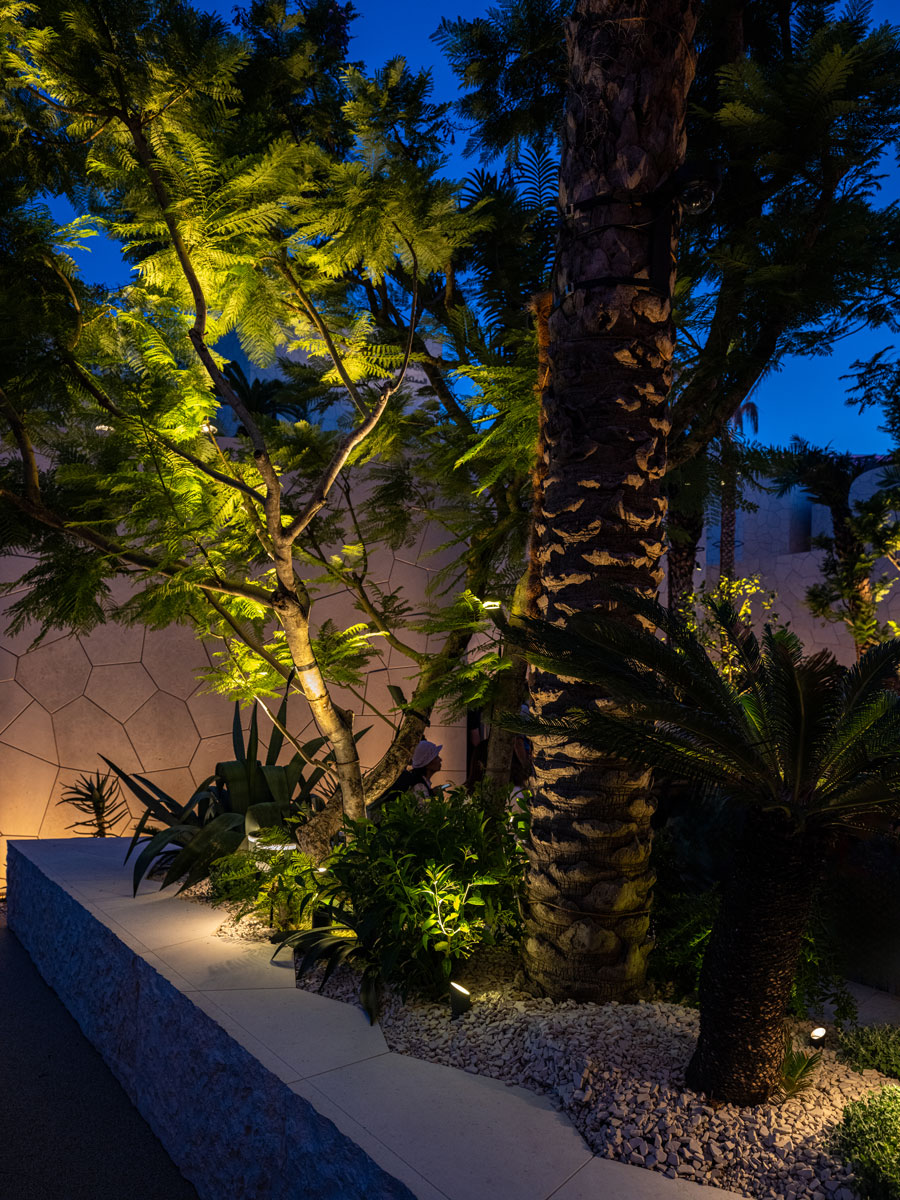
A clear lighting hierarchy is defined: stronger accents on vertical elements such as tree trunks and canopies, and softer levels across undergrowth and pathways, ensuring wayfinding without overpowering the space.
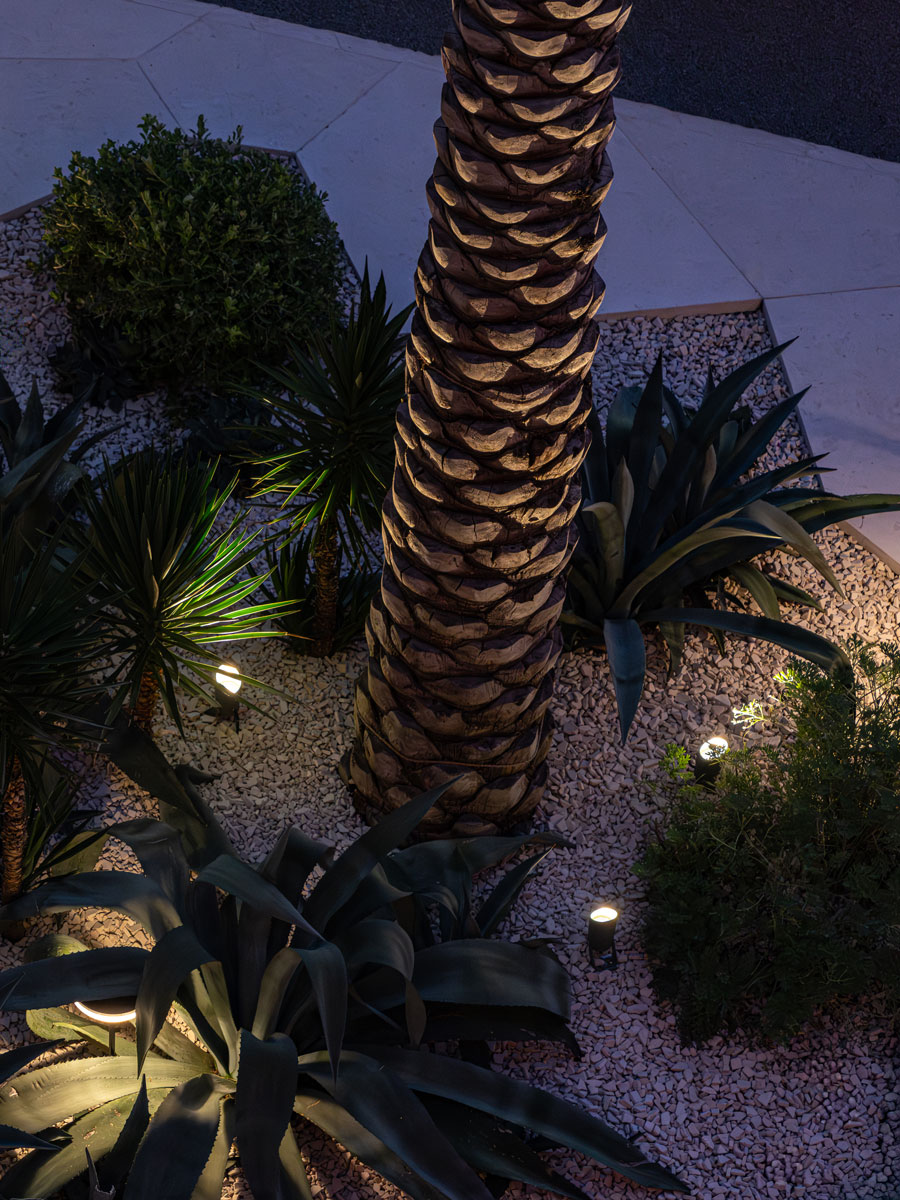
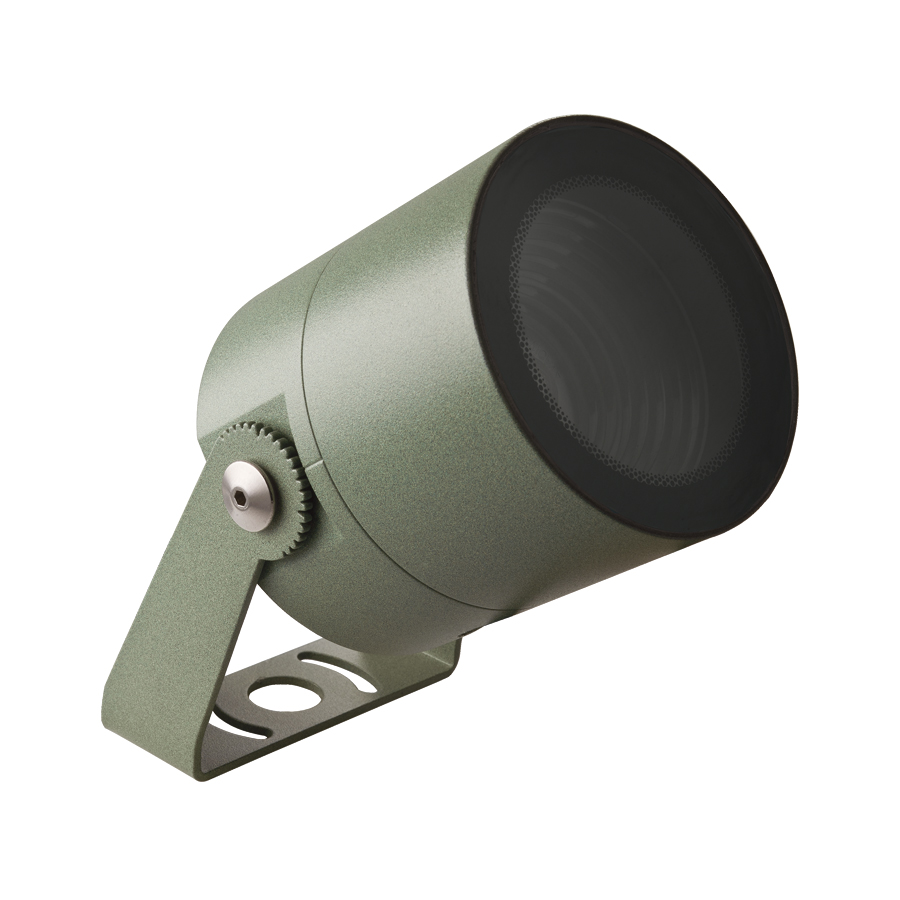
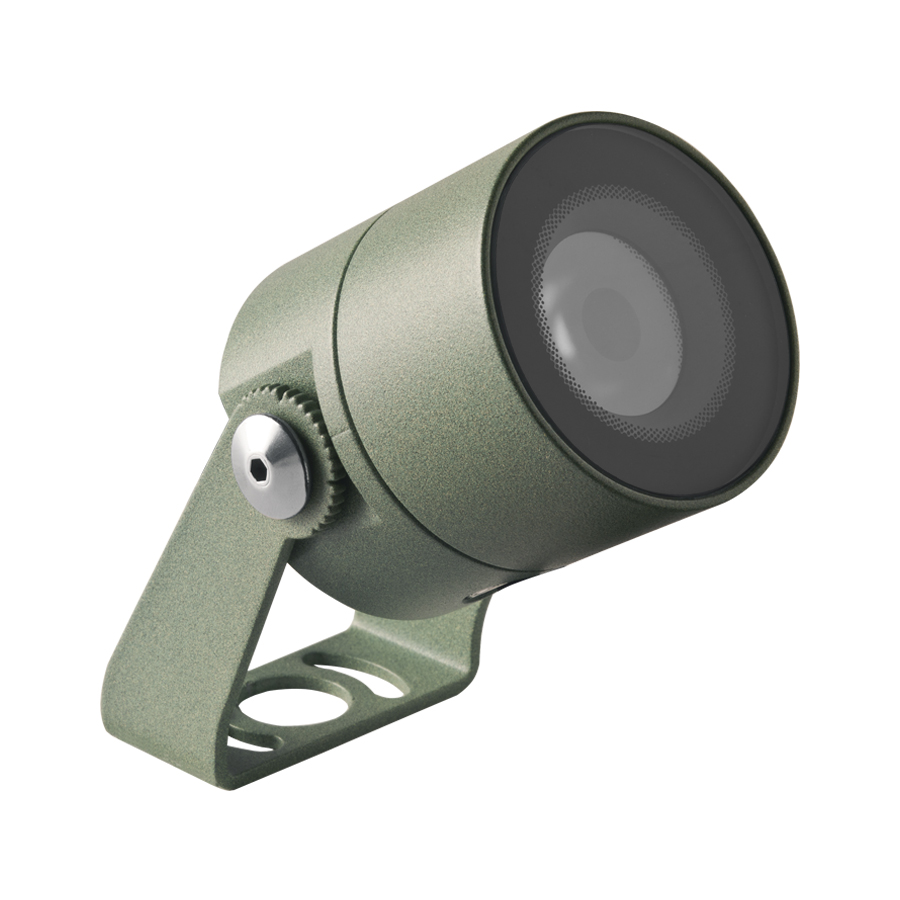
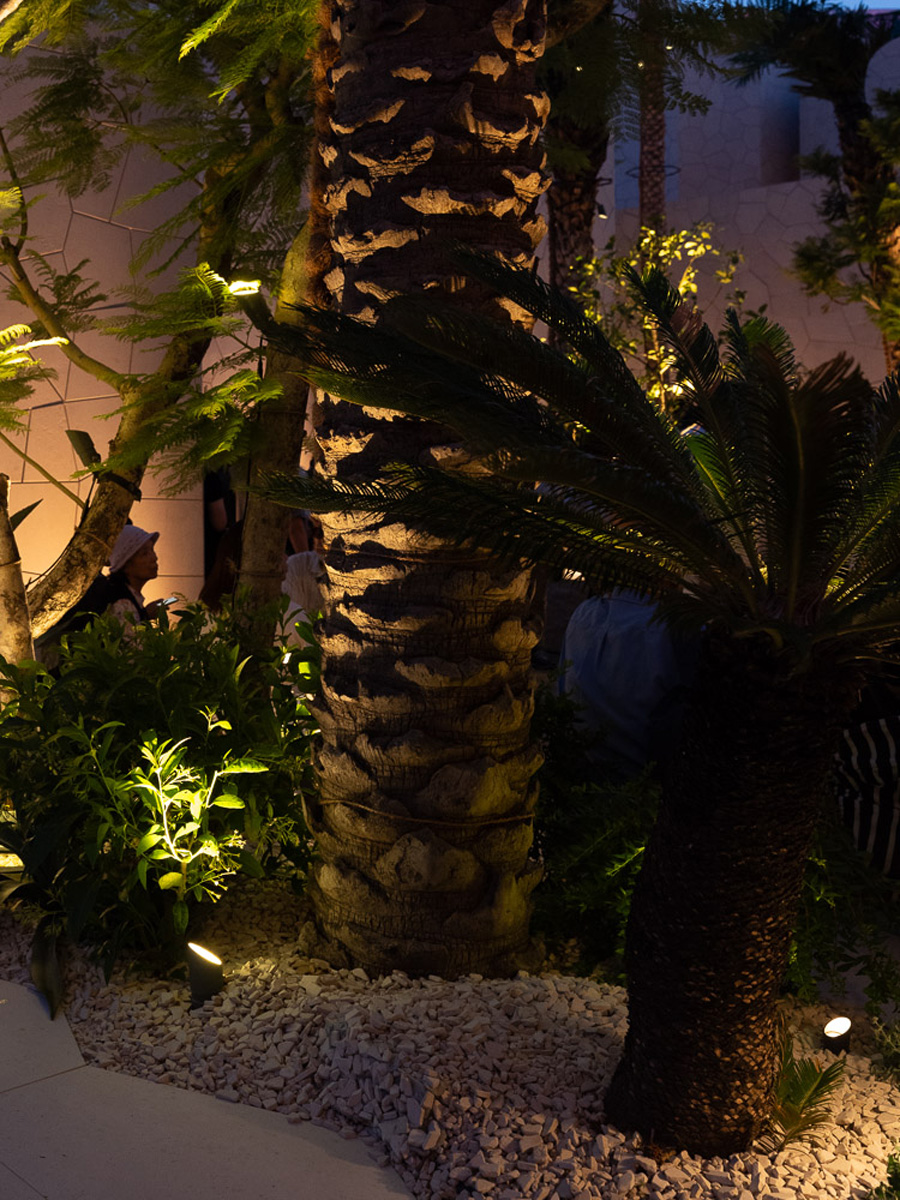
In the garden, Ginko 1.0 and 3.0 projectors in an anthracite finish are installed on the planters to illuminate plants and shrubs with focused beams. The use of both narrow and elliptical optics, combined with an asymmetrical snoot, enables precise light direction, avoiding spill light while enhancing the texture of the vegetation.
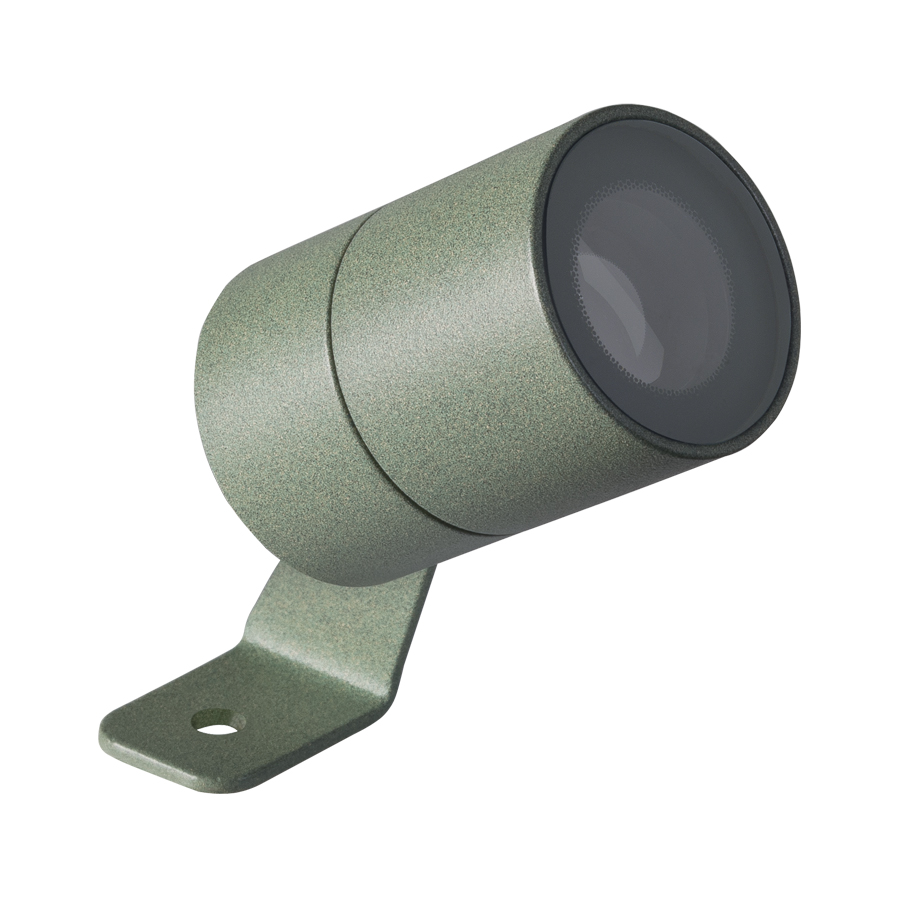
Mounted on palm trunks, Ginko 2.0 projectors in a mineral green finish blend into the natural setting, minimising visual impact. The 47° optics, paired with an asymmetrical snoot, cast a controlled beam onto the trunk and canopy, while the honeycomb louvre helps shield the source, ensuring excellent visual comfort.
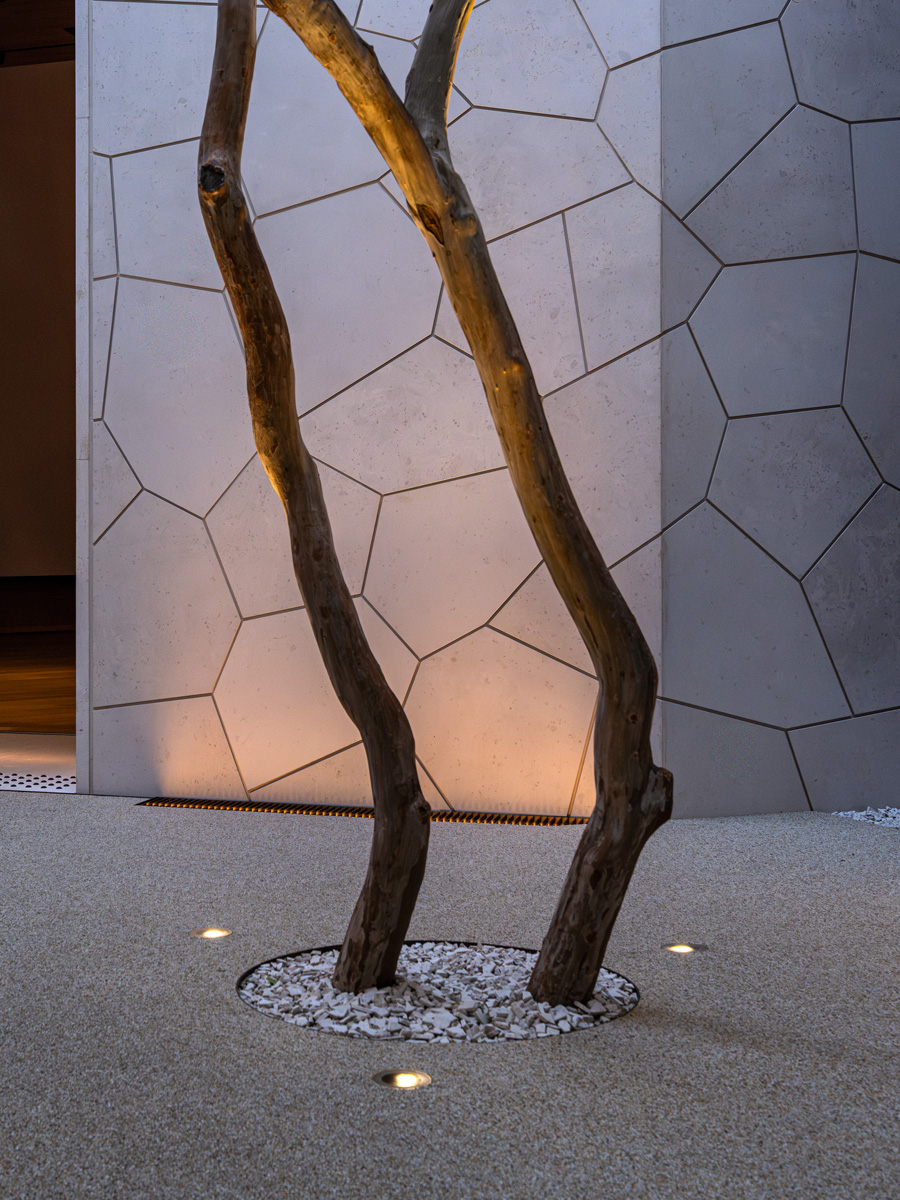
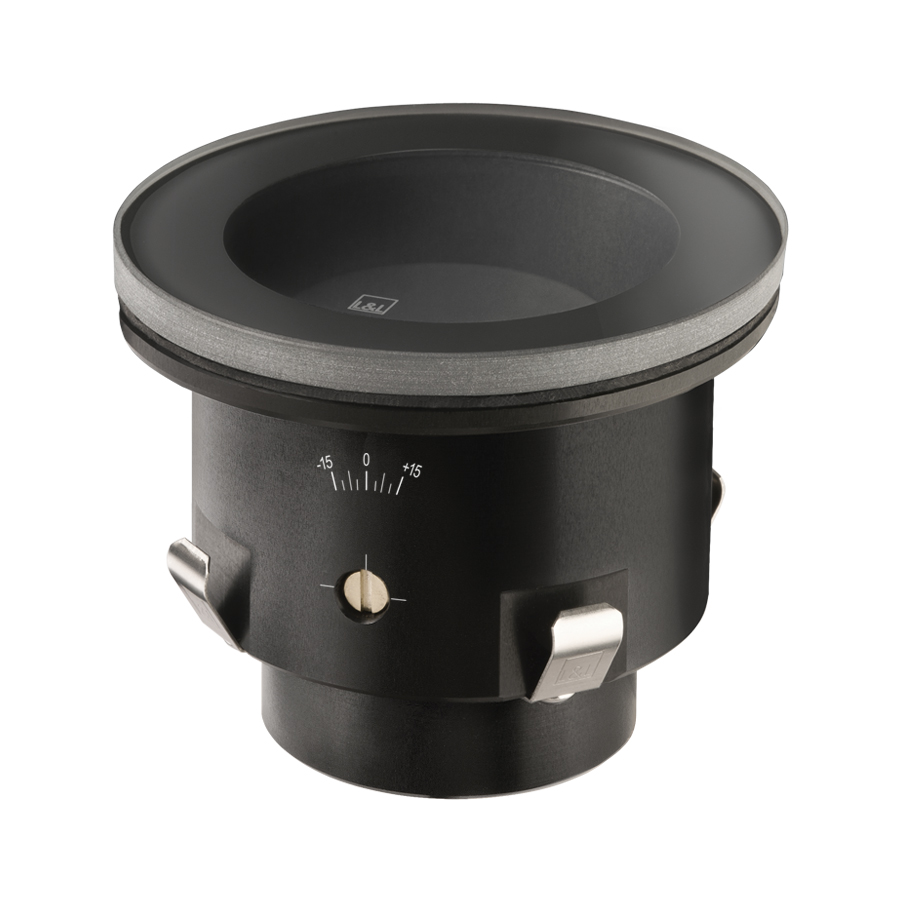
Along the corridors, Litus 5.6 recessed fixtures illuminate the vegetation from below, guiding visitors’ steps with soft, controlled light. Here, too, the integration of a honeycomb louvre limits direct visibility of the source, creating a more uniform and comfortable light perception along the pathways.
The result is lighting that’s fully consistent with the architectural concept: the illumination enhances the vegetation, defines the space and accompanies the experience without overpowering it, shaping a balanced and functional night-time narrative.


Castelnau-le-Lez, France

Genoa, Italy
 All projects
 All articles