| Year | 2026 |
|---|---|
| Location | Giardini della Marinaressa, Venice |
| Application | Gardens and Landscape, Museums and exhibitions |
| Photo | Alessio Tamborini |
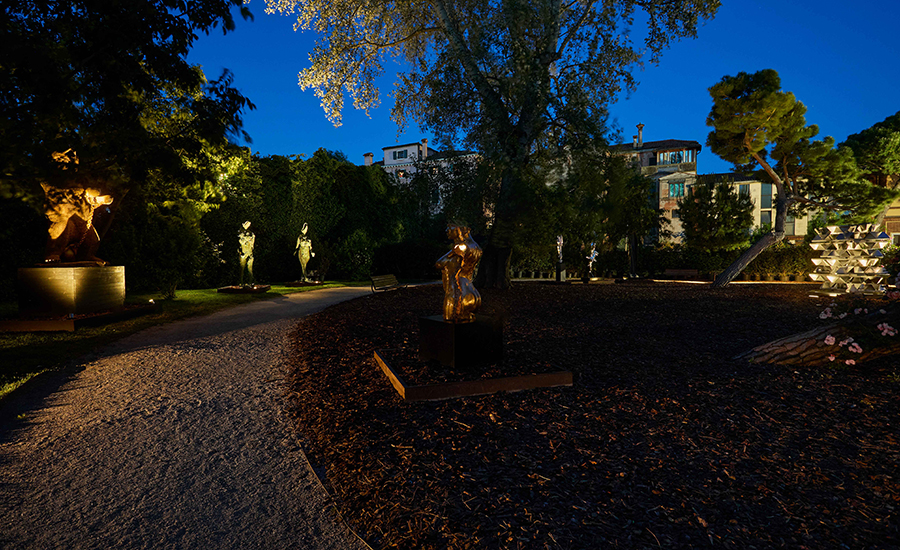
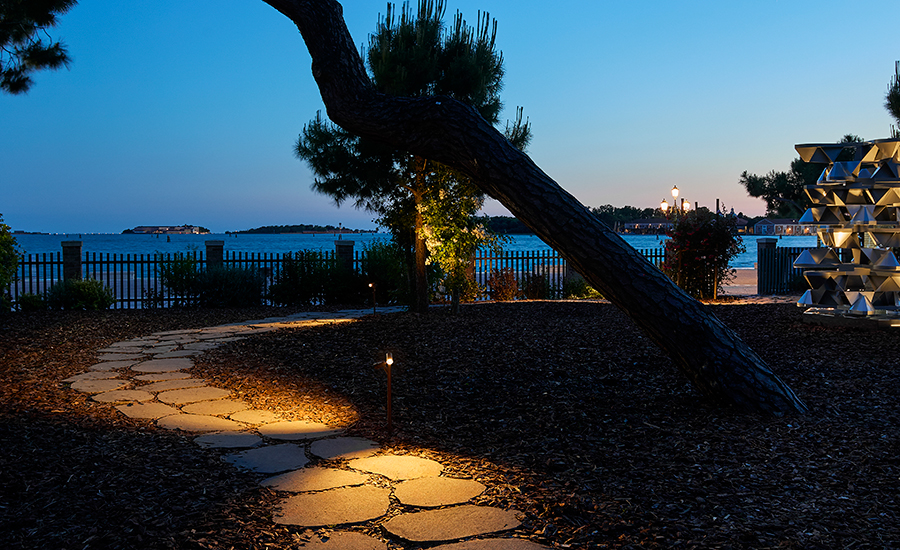
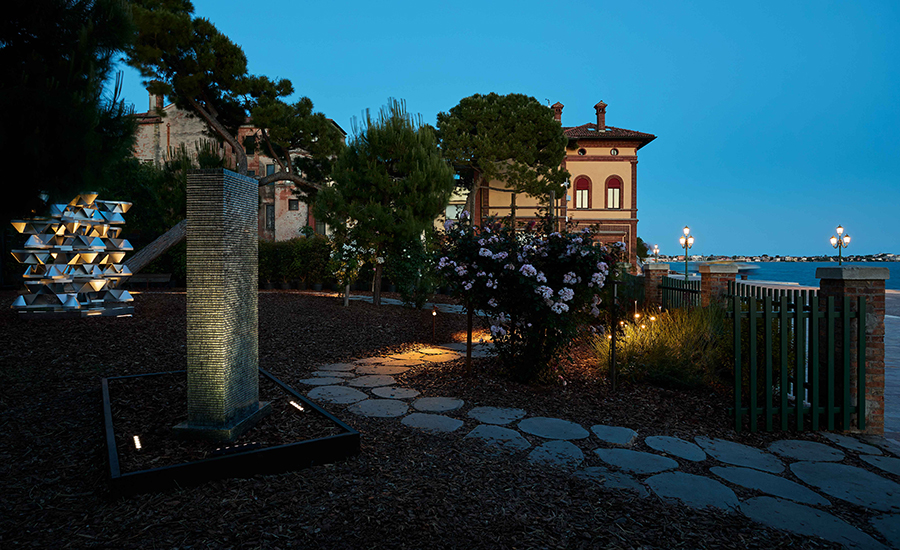
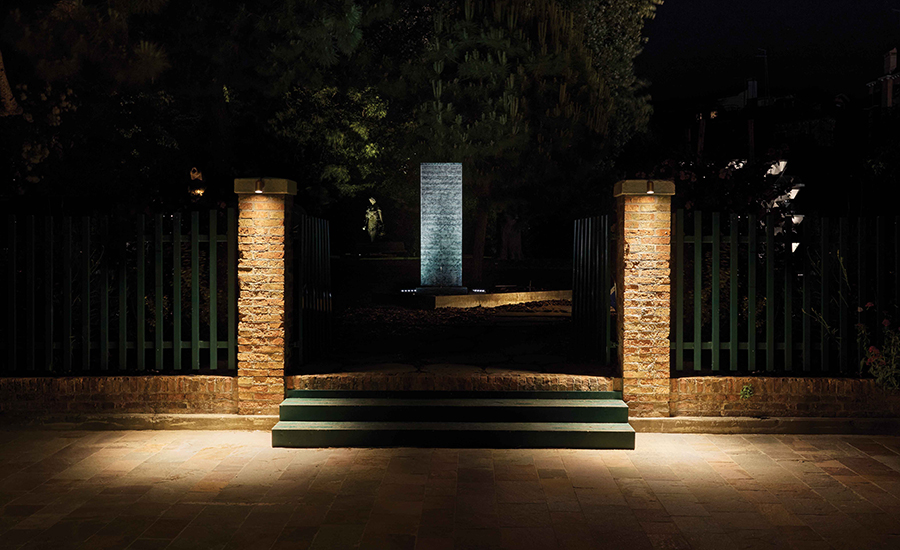
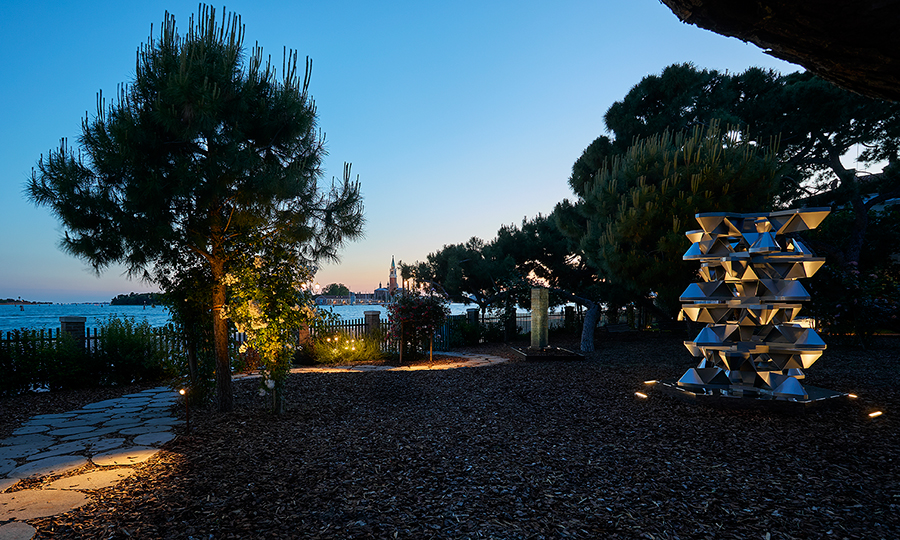
Nestled in the Venetian lagoon, between historic palazzi, maritime pines and the gentle ebb and flow of the sea, the Marinaressa gardens welcome visitors to an exhibition route where artworks emerge from the landscape and converse with the surrounding space.
The lighing disign project is part of the 2026 Venice Biennale, as part of the exhibition Personal Structures – Confluences, organized by the European Cultural Centre (ECC), which explores the intersection of different artistic practices, cultures and languages, bringing together contrasting perspectives and new forms of expression.
The lighting for the eastern garden, the work of Luce&Light, guides visitors through an immersive experience in which art, architecture and nature intertwine thanks to warm, carefully controlled lighting that becomes part and parcel of the landscape.
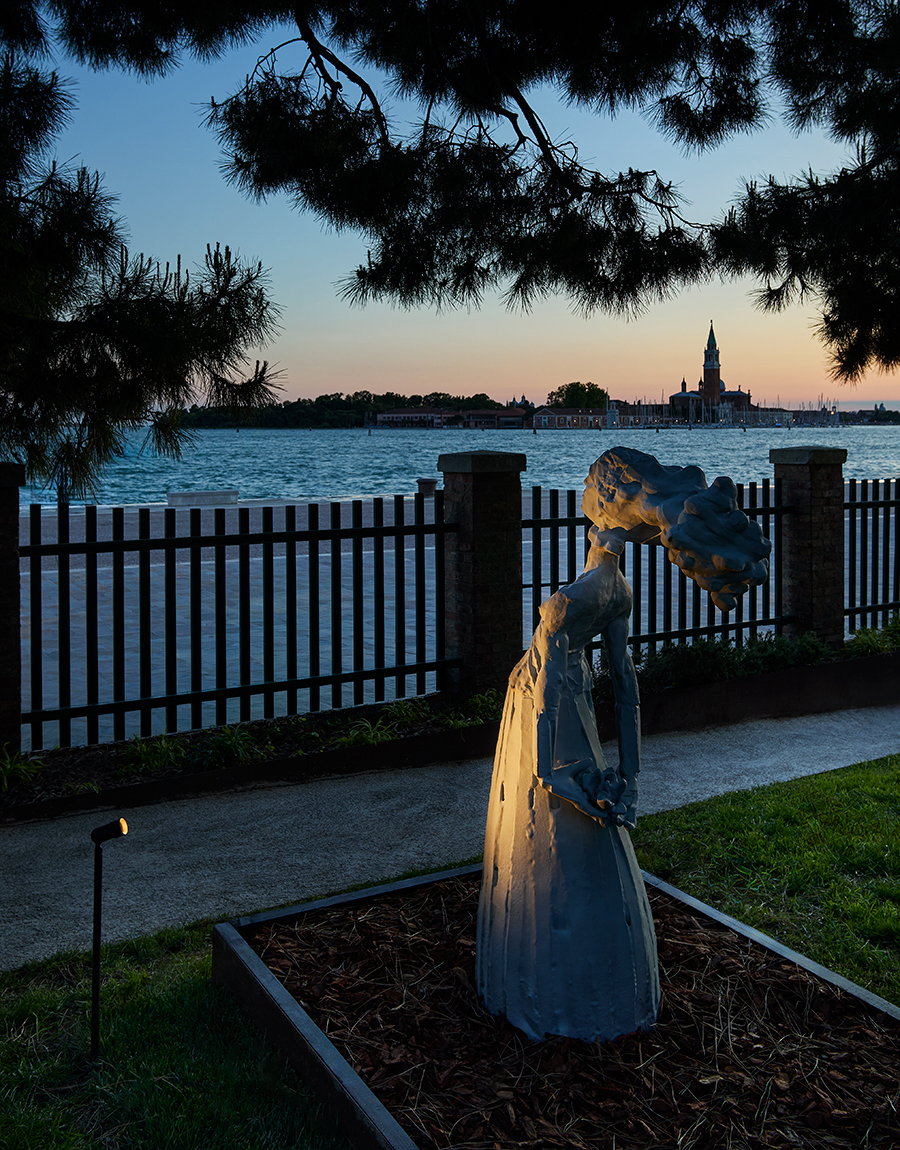
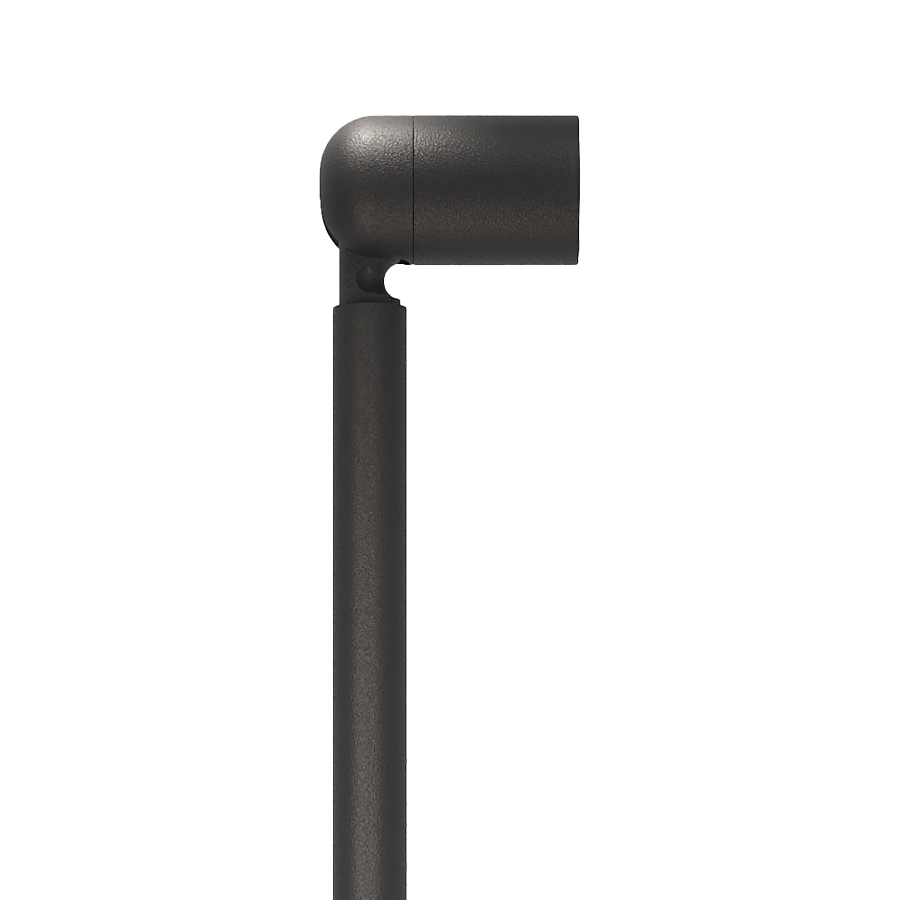
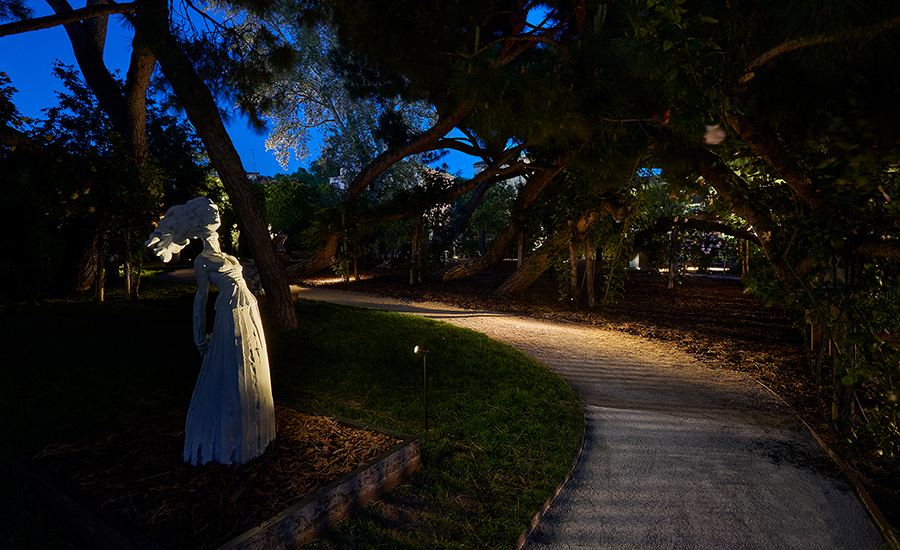
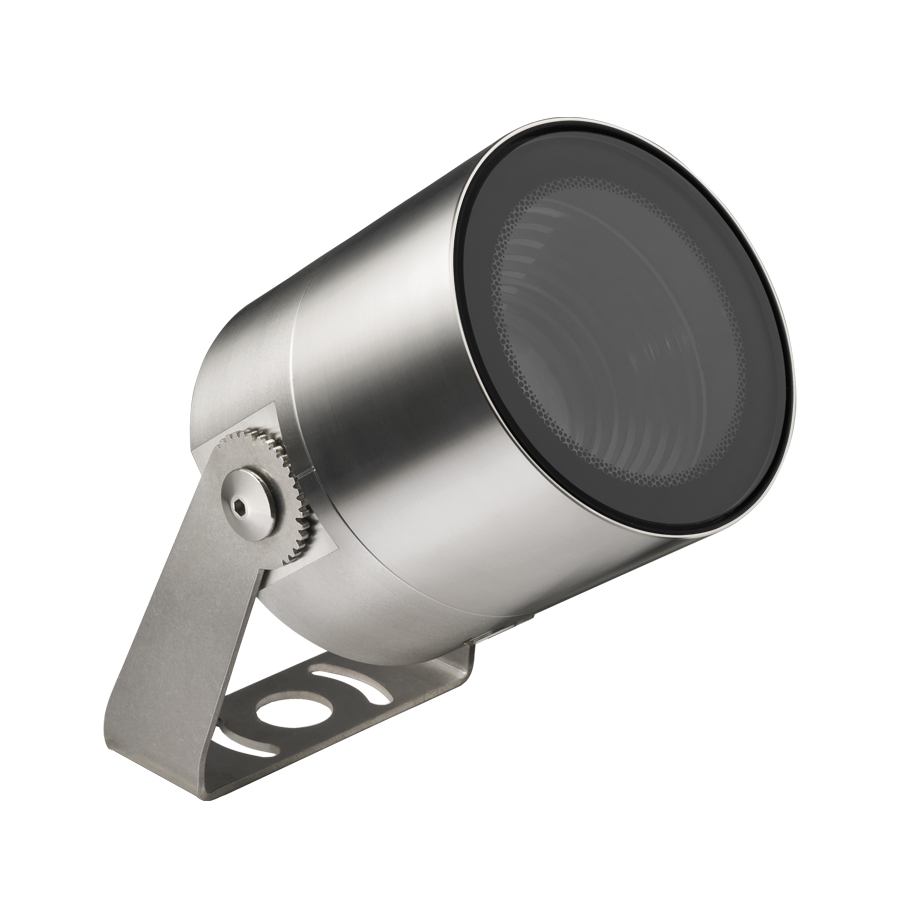
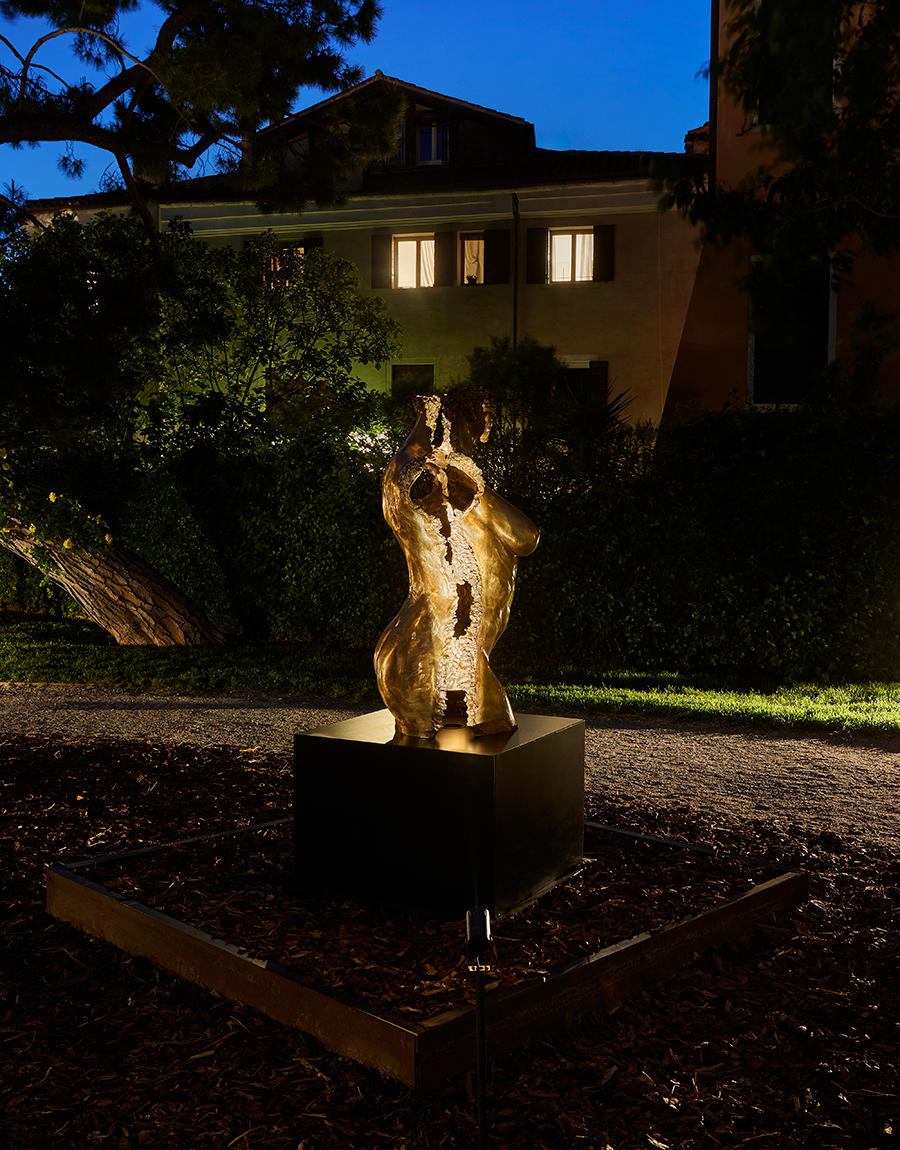
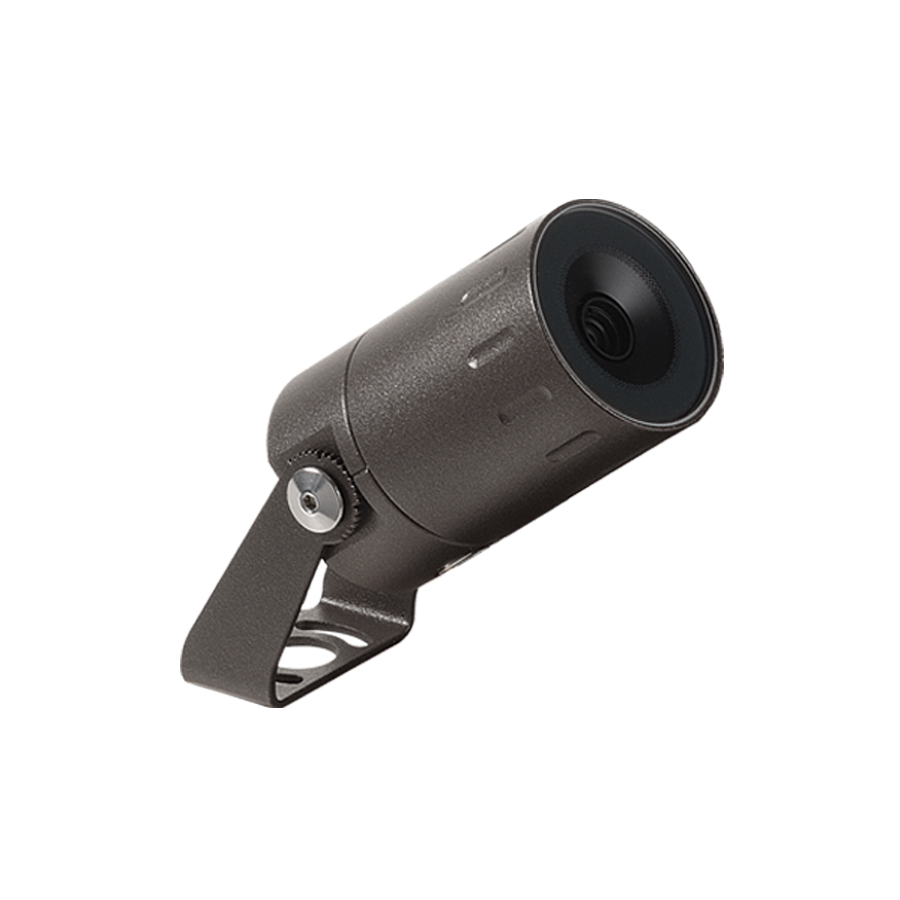
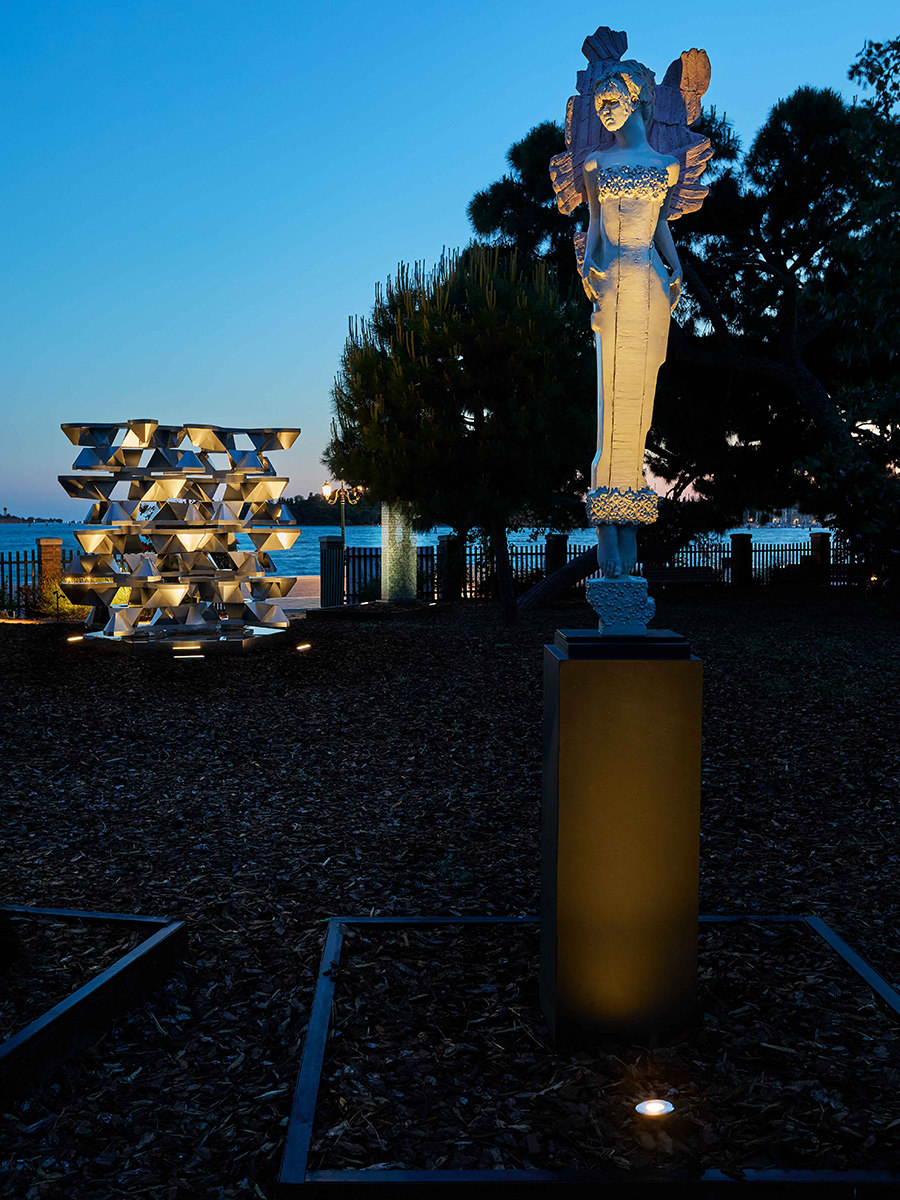
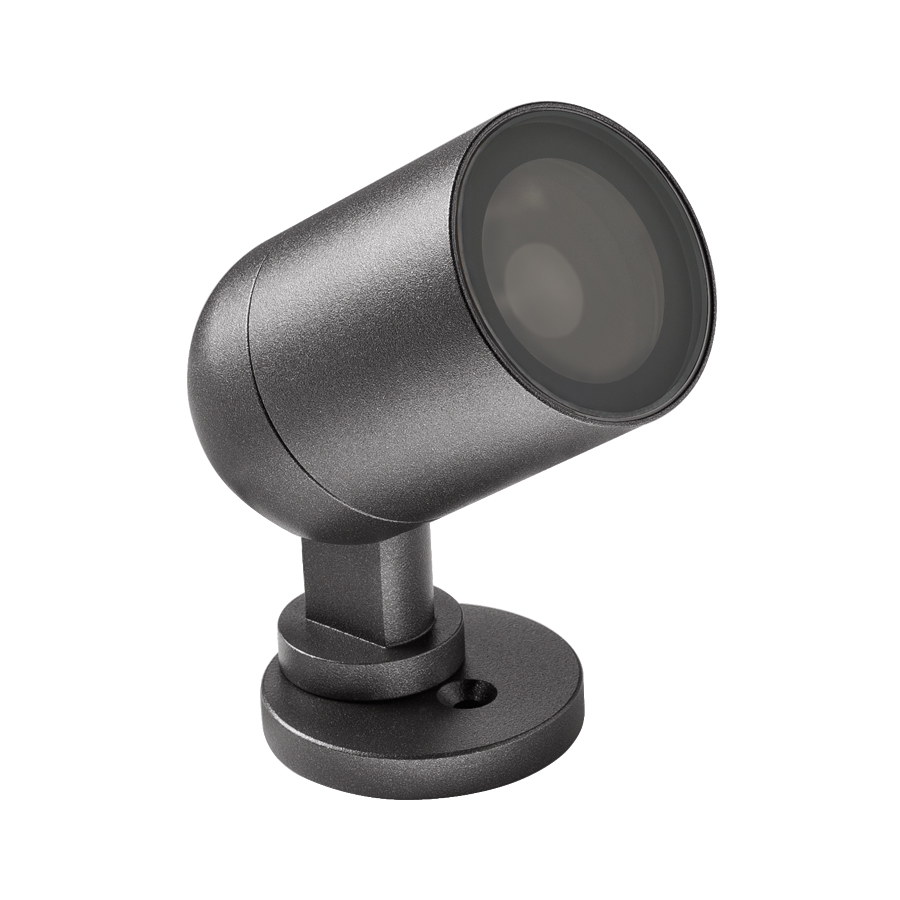
The route opens with Aphrodite, by Jamie Lester, which delicately emerges from the darkness. Light from a vertically mounted Pivot B 1.9 with 13°x47° elliptical optics follows the figure’s form without spilling into the surrounding landscape.
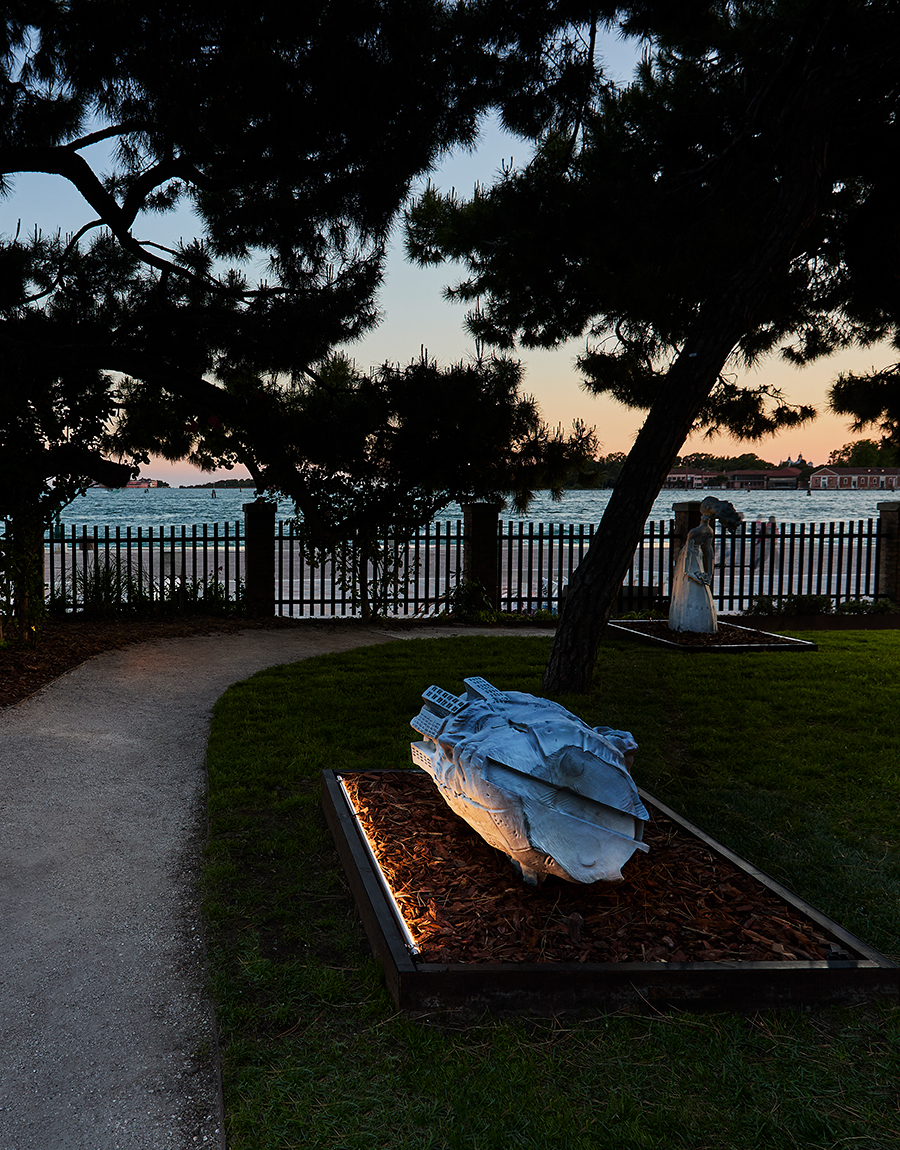
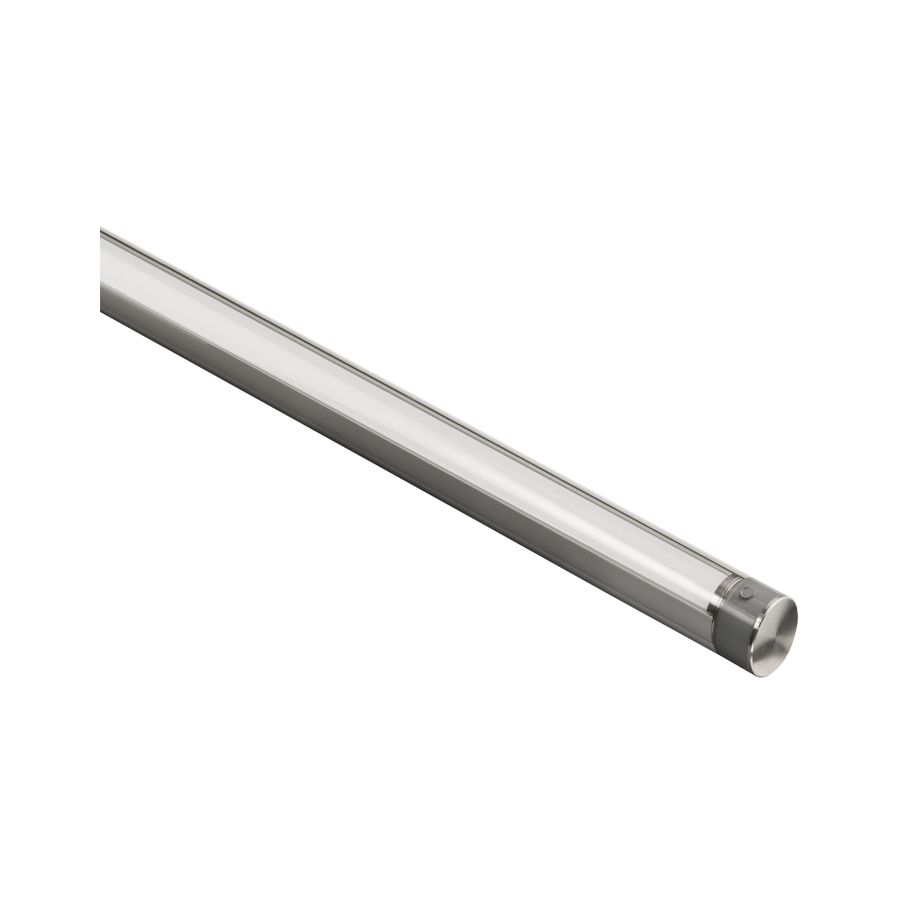
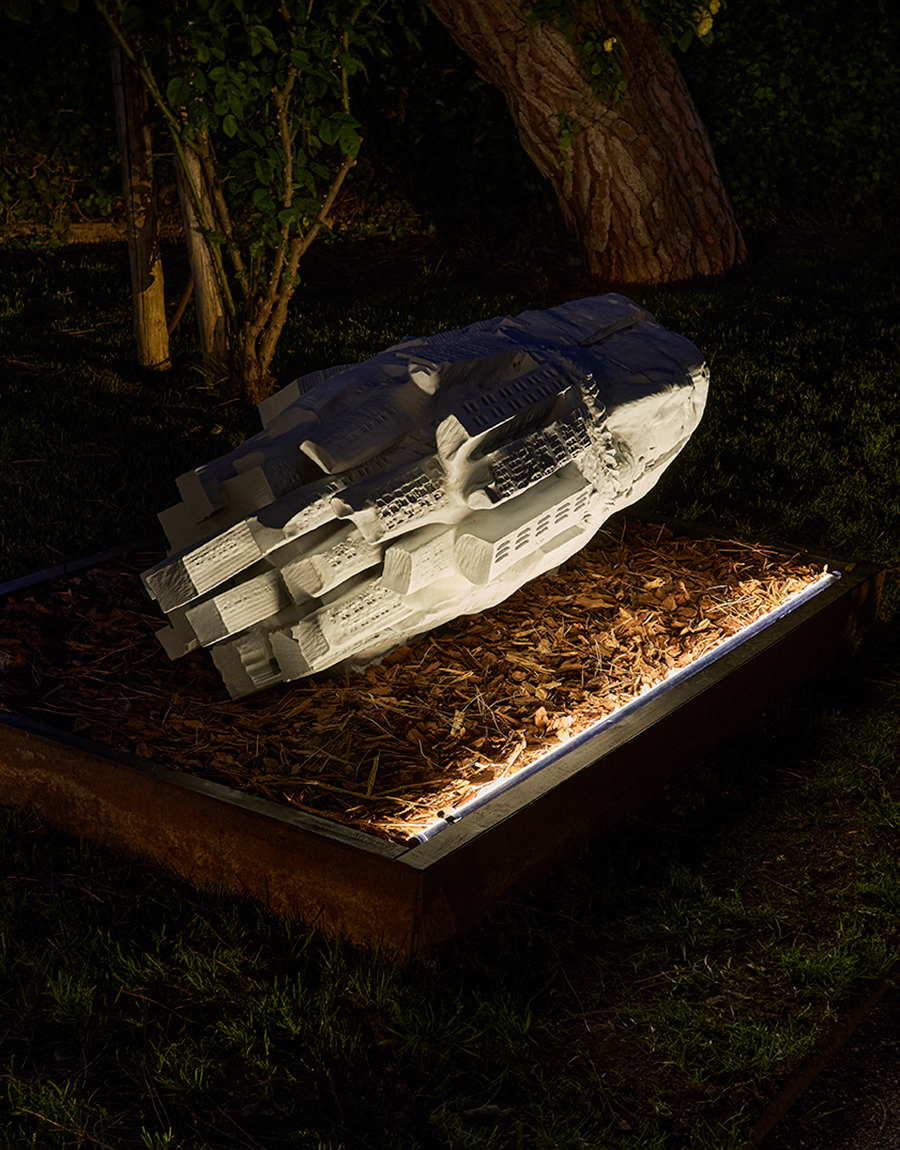
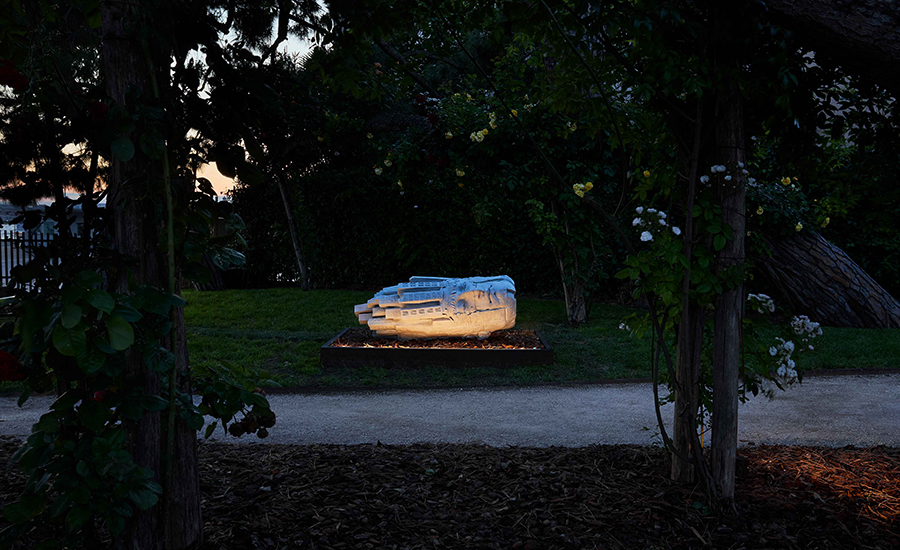
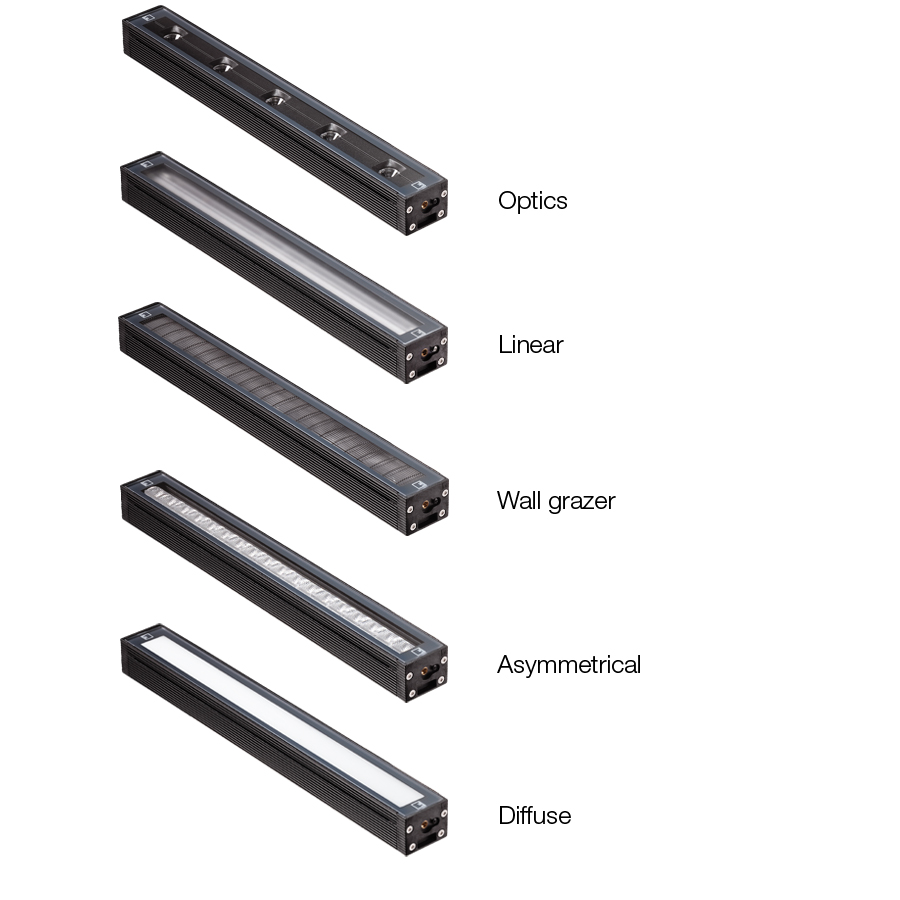
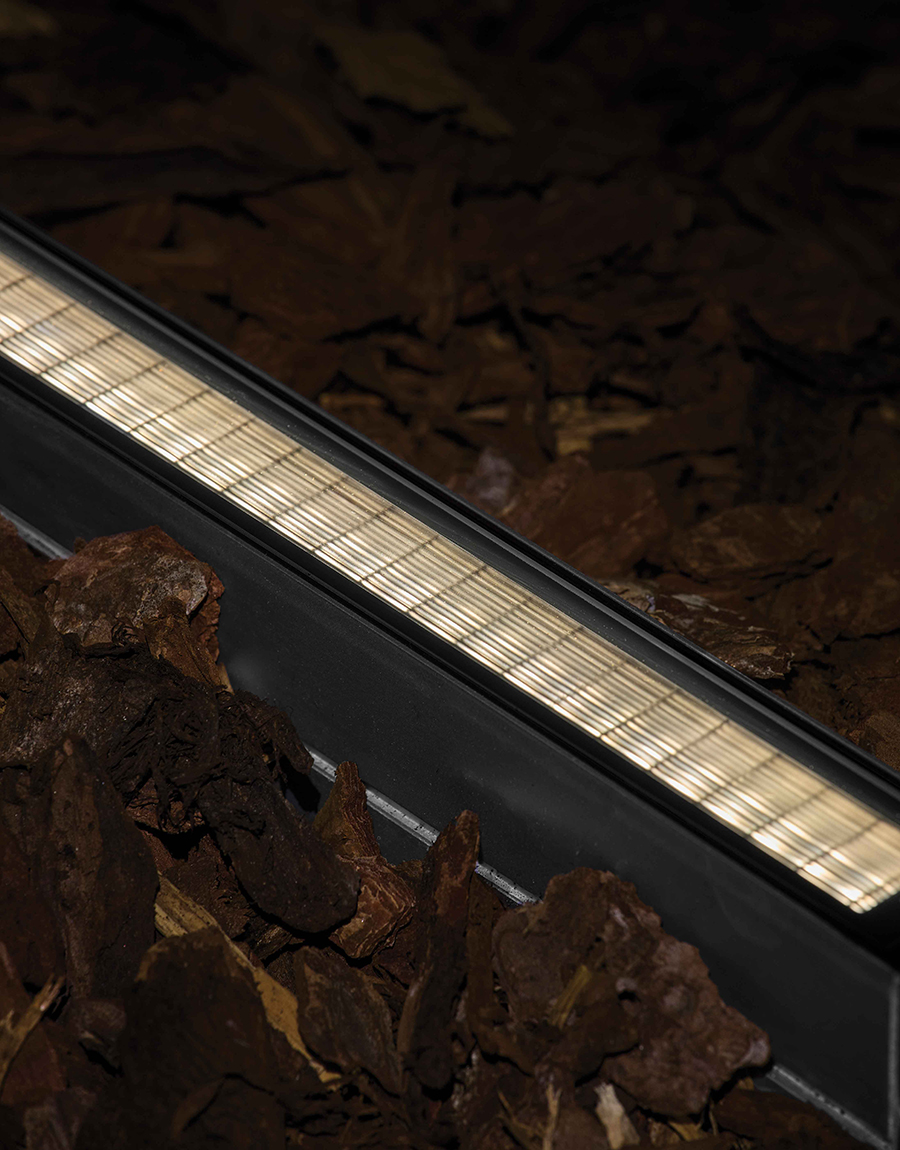
A little further on, the reclining head of Zeus, by the same artist, is bathed in a soft, uniform light generated by a Trevi 1.2 diffuse linear profile, which gently reveals the details of the face and the materials used.
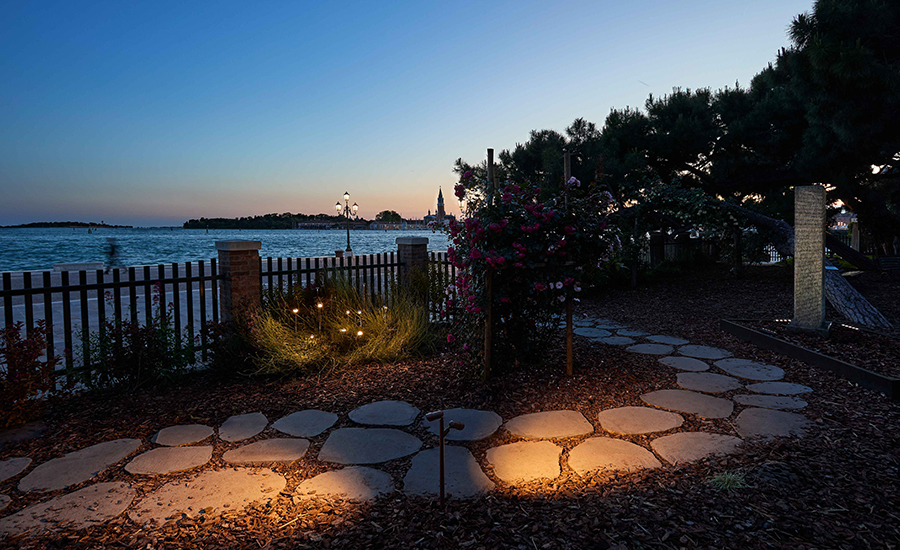
The trail is marked out by Lyss Mini with 9°x160° optics, creating a discreet grazing light at ground level and guiding visitors without glare.
On the other side of the path, Gea, by Malisa Catalani, can be glimpsed in the semi-darkness. Initially almost hidden from view, the sculpture gradually reveals itself as visitors approach, its profile and inner form sculpted by the beam of a Ginko 2.5 Light Shaper.
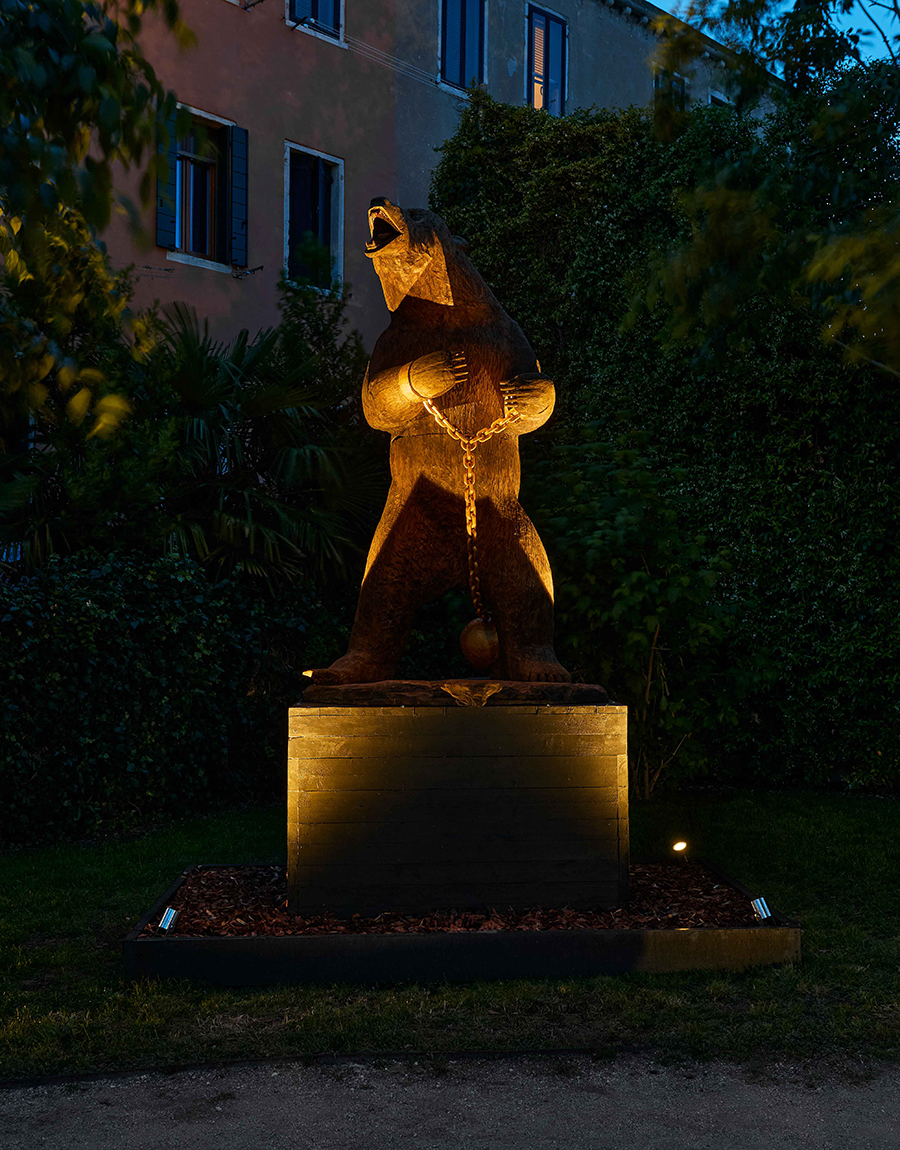
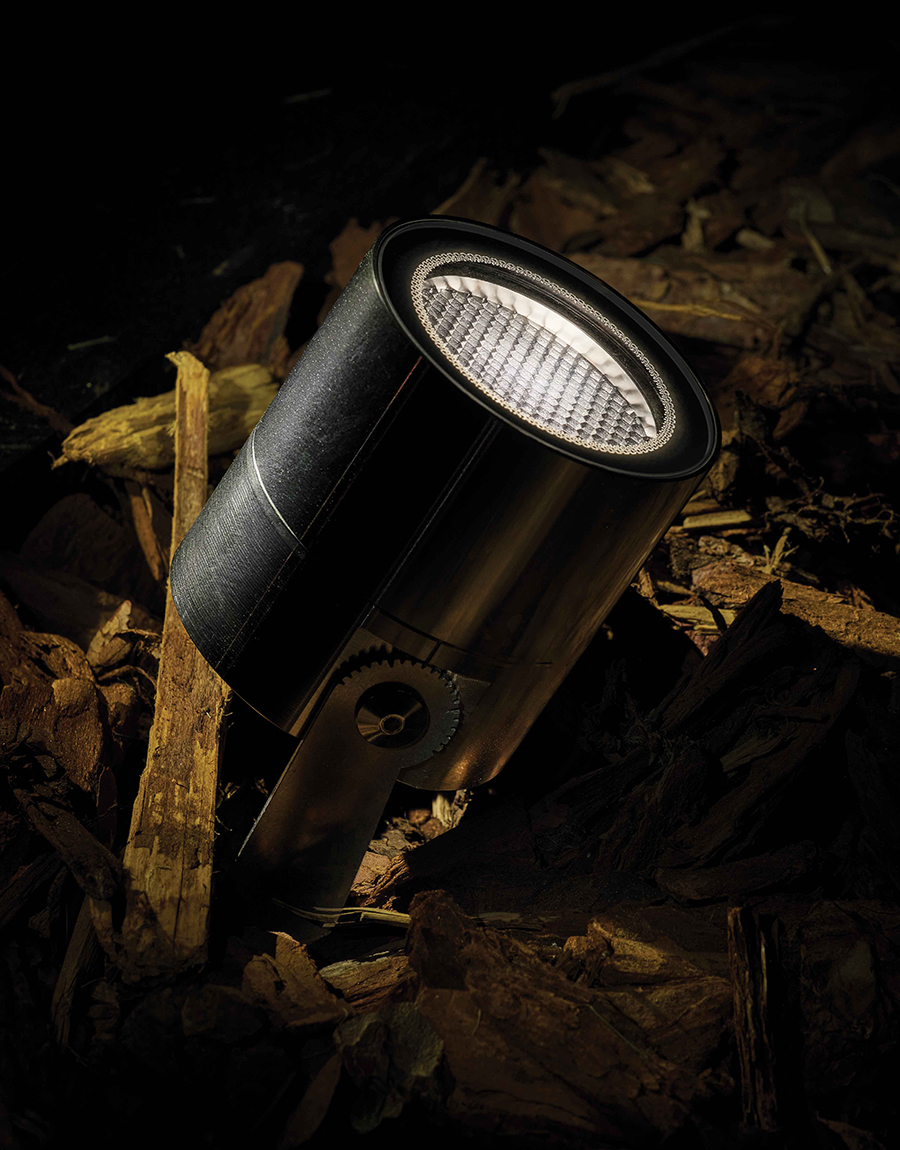
The illumination of Taming the Beast with the Heart, by Aigars Bikše, is particularly dramatic: the monumental oak bear is lit from below by three stainless steel Ginko 3.0 fixtures fitted with honeycomb louvres, while a fourth Ginko, with a very narrow 2° beam, lights the chains from above, reinforcing the work’s symbolic significance.
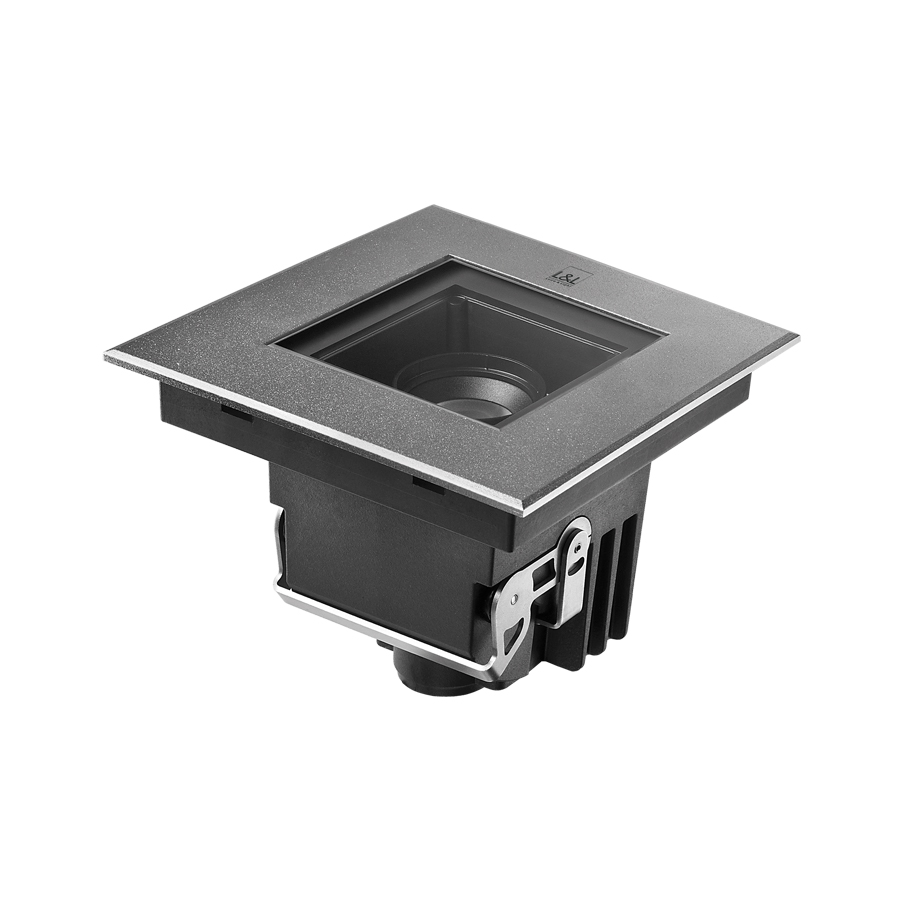
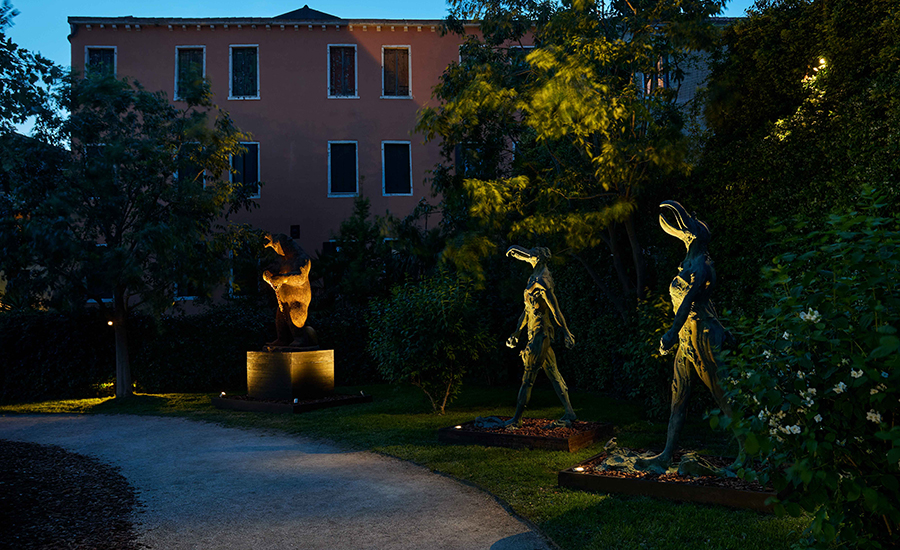
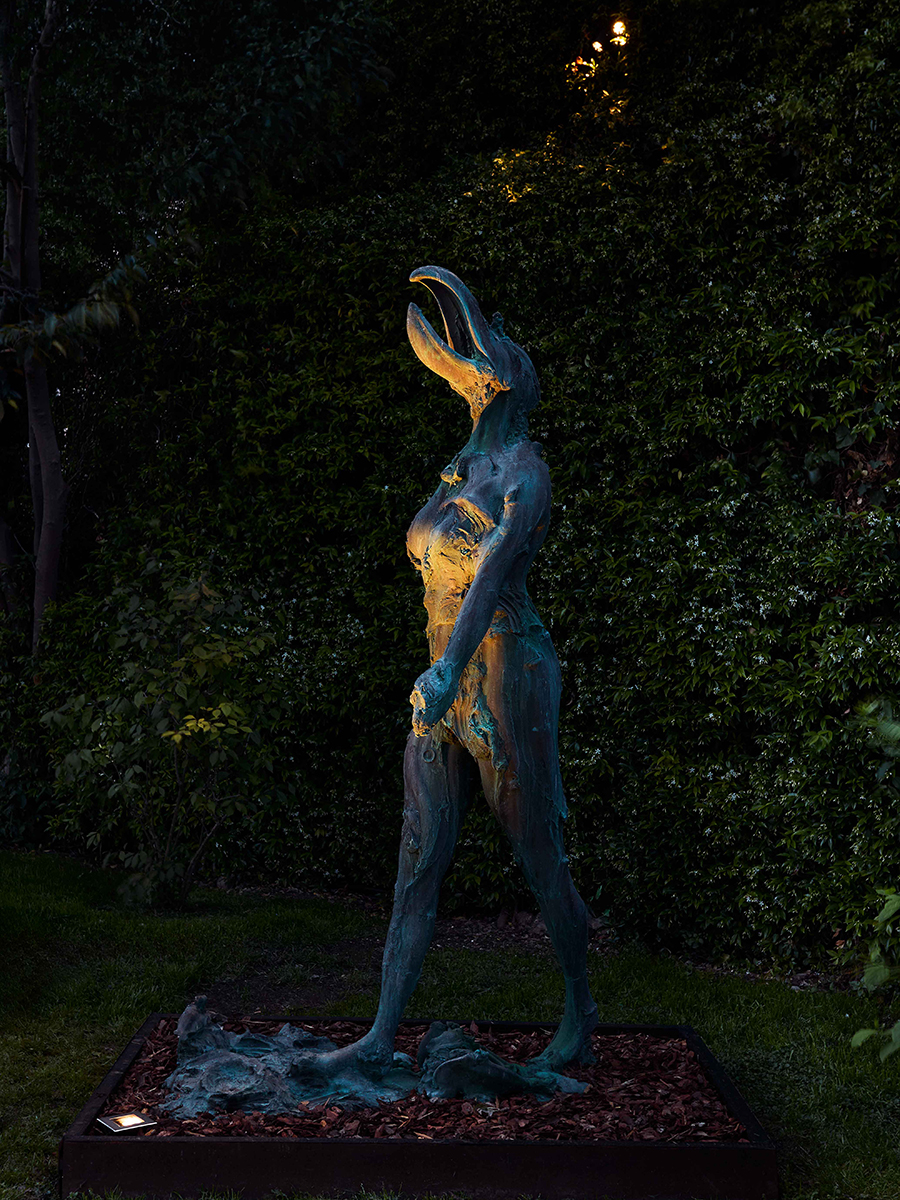
Further along the route stand She and He, by Jakov Brdar: two large bronze statues facing out towards the lagoon and illuminated by tiltable Quilatero 2.4 recessed fixtures built into the bases. Their 3000K light intensifies the figures’ expressive power and amplifies the dramatic tension.
Behind them, stainless steel Ginko 3.0 fixtures, with 48° sharp optics and shadow-effect filters, are mounted among the climbing plants using dedicated straps. The result is an atmospheric light scene along the central pathways evoking sunlight filtering through a canopy of leaves and branches.
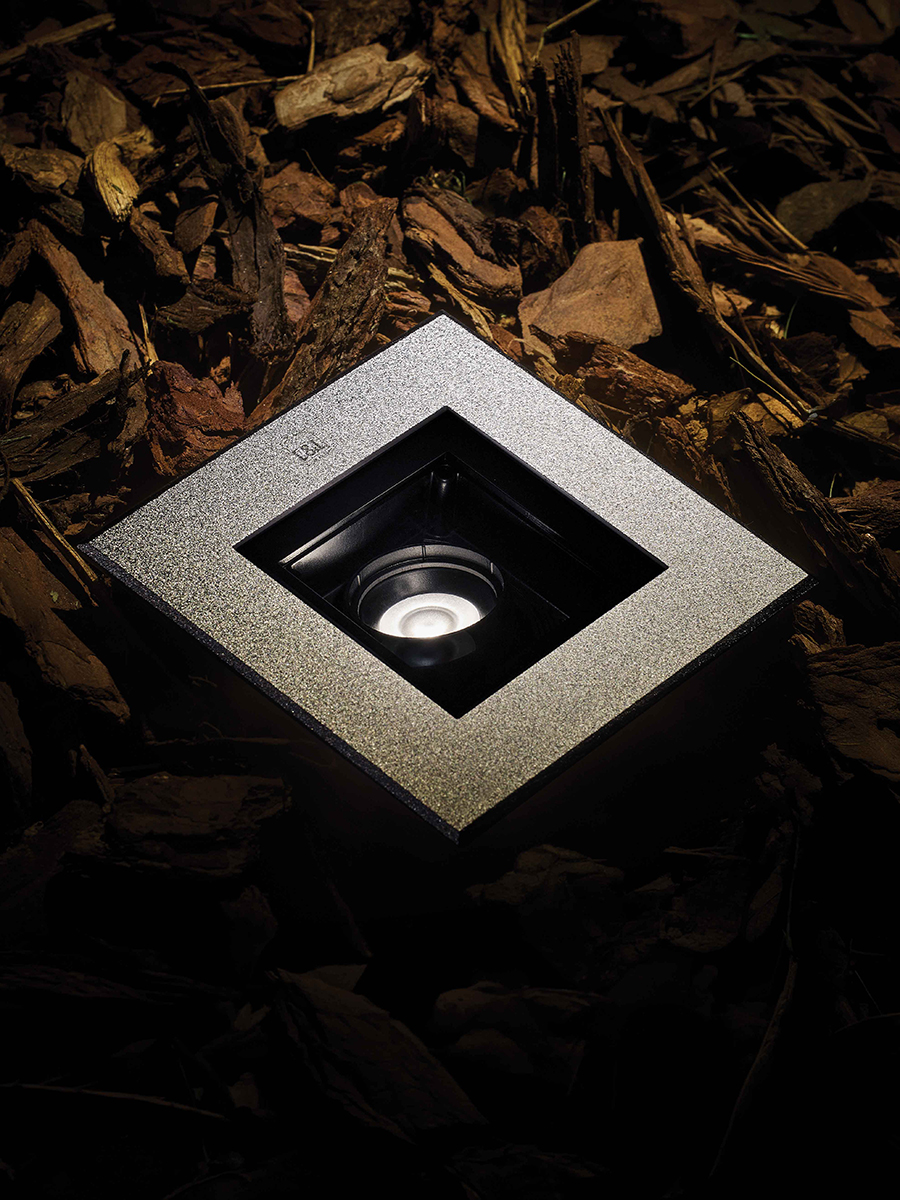
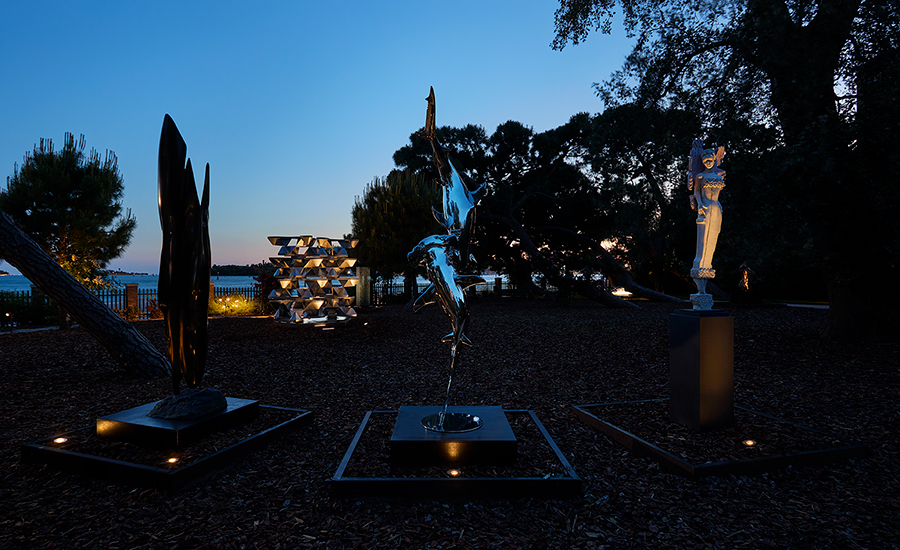
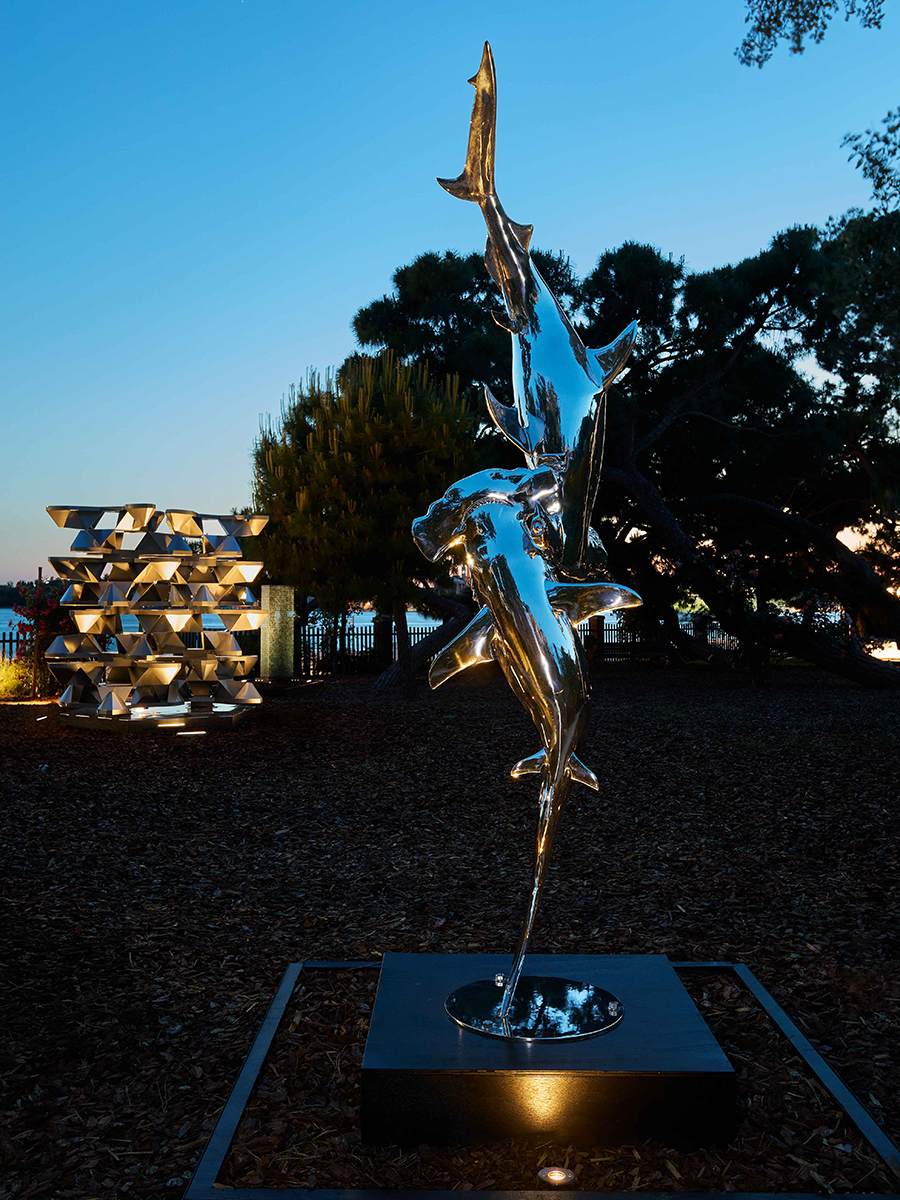
Further on, a trio of statues comprising White Chameleon, by Stephen Glassborow; Emergence 1, by Sonia Payes; and Fratelli, by Omar Viglino; is illuminated from below by Bright 2.4 recessed fixtures in stainless steel, with narrow 17° beams and half-clear, half-satin semi-diffusing screens. This solution broadens the light distribution at the base of each sculpture while maintaining a precise, focused vertical beam.
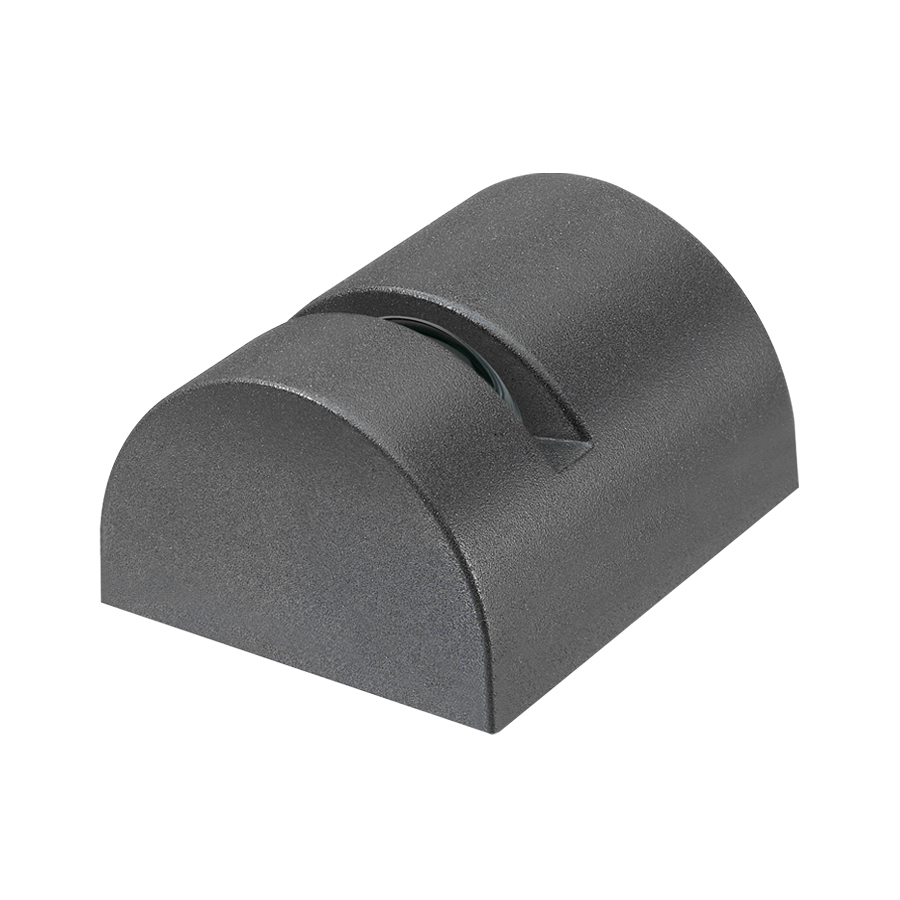
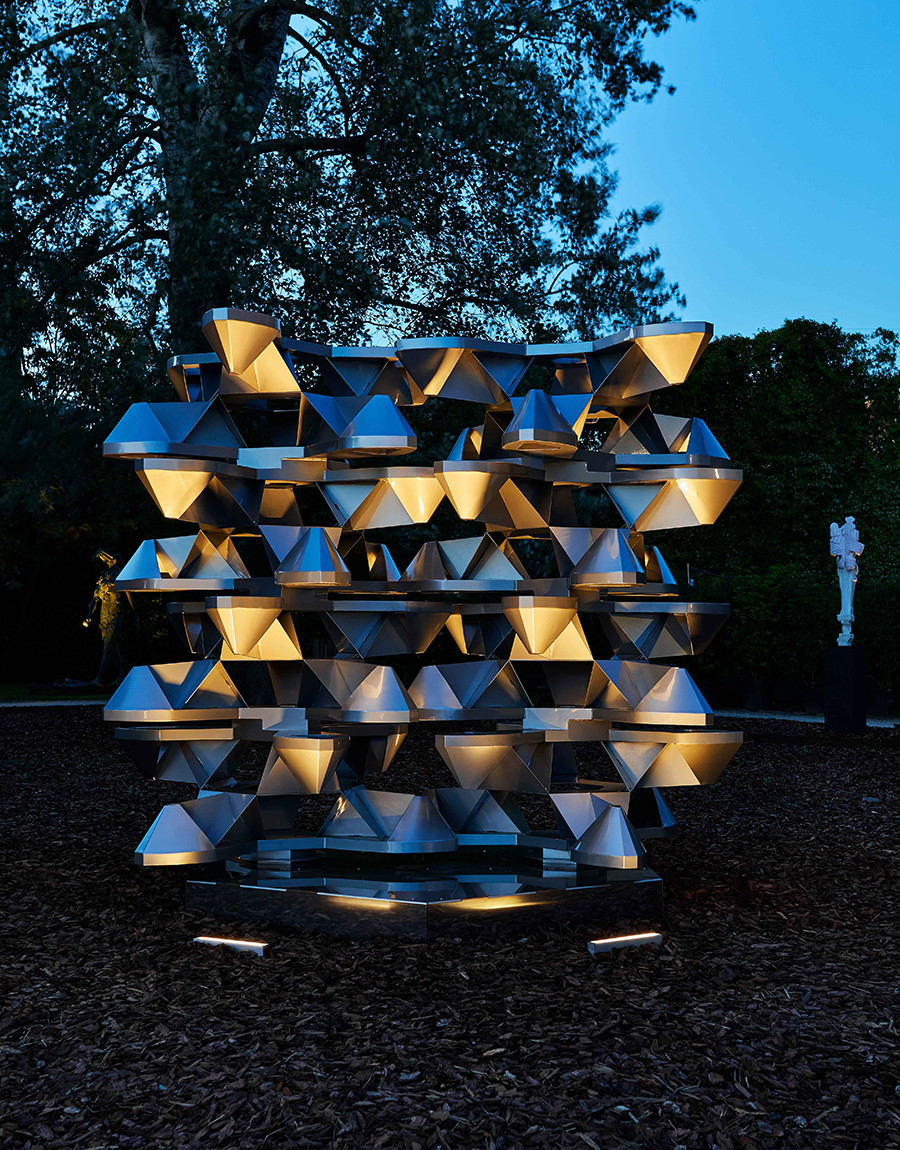
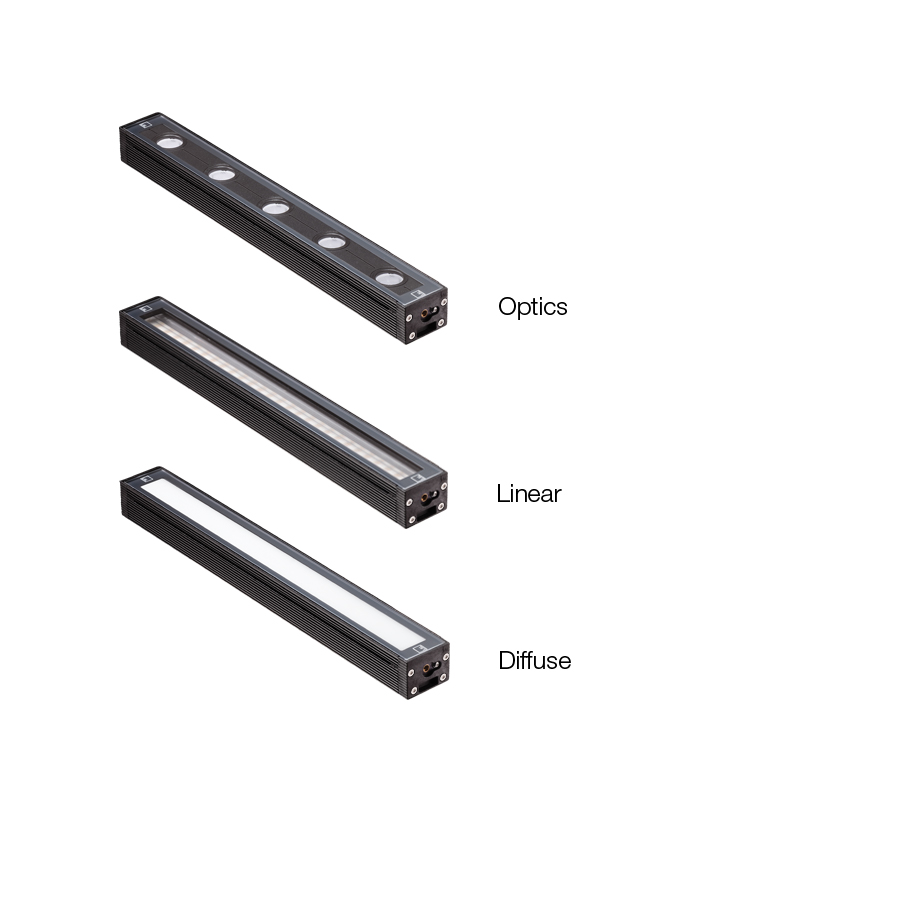
Looking towards the centre of the garden, visitors encounter Pollinator 1, a monumental steel structure by Jakob Bokulich. The work is lit by the new Neva Mini Pro 1 wall washers, flanking the base of the sculpture. The fixtures are recessed using dedicated outer casings and fitted with micro-louvres to achieve a soft, enveloping, glare-free light.
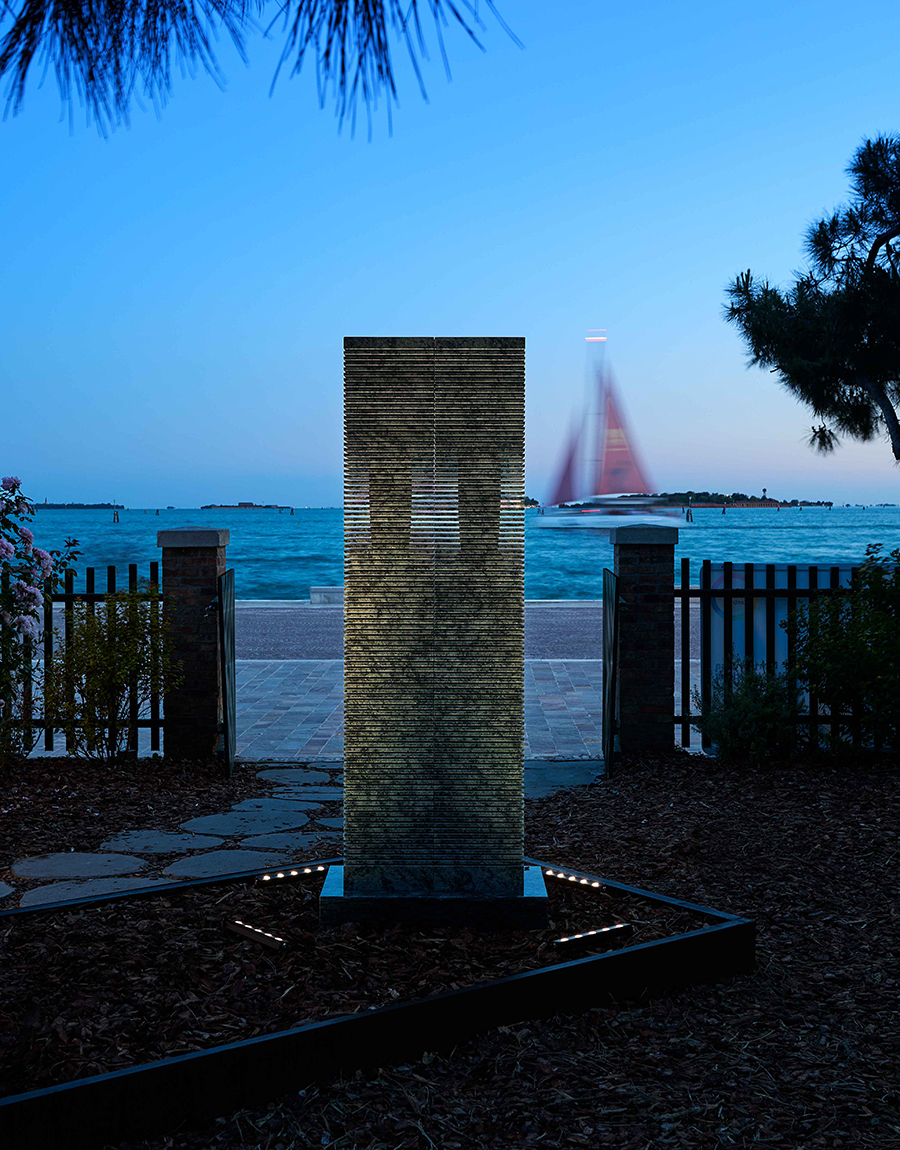
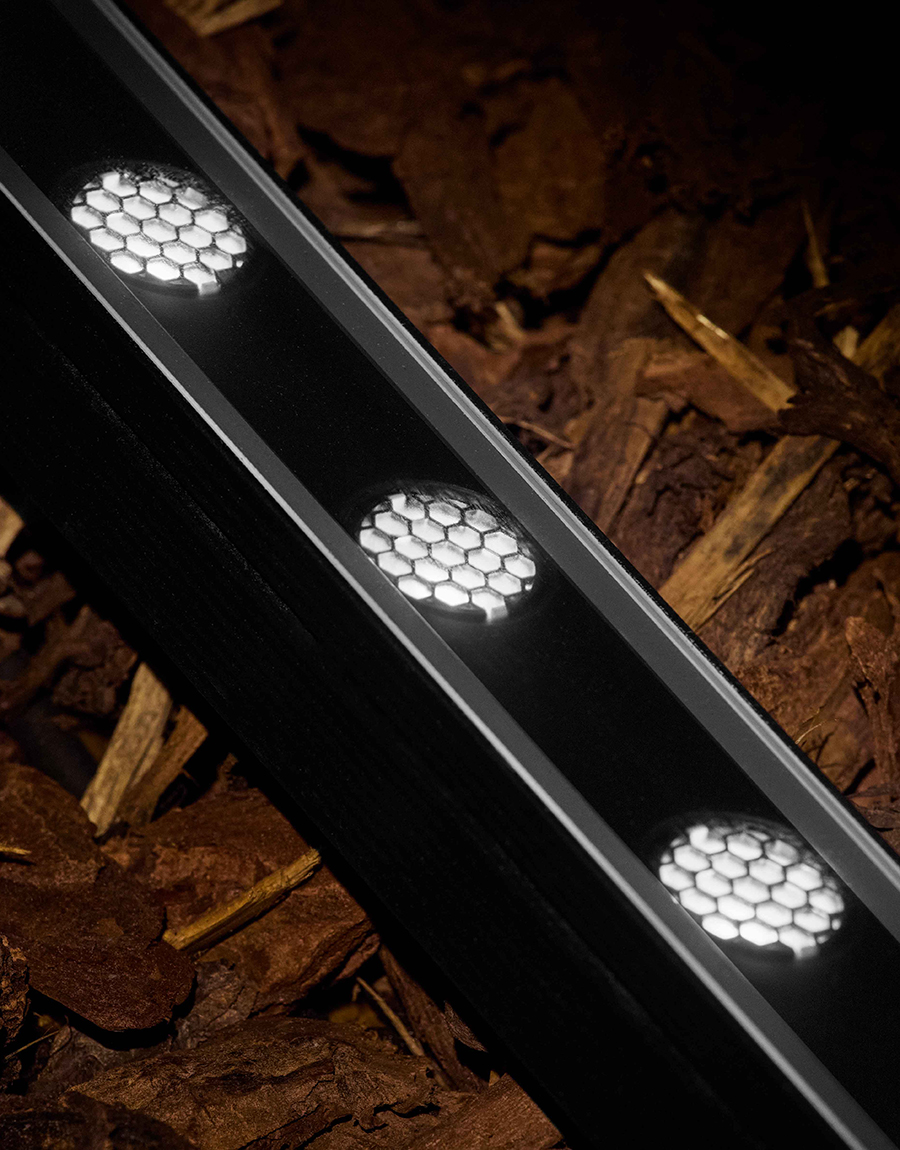
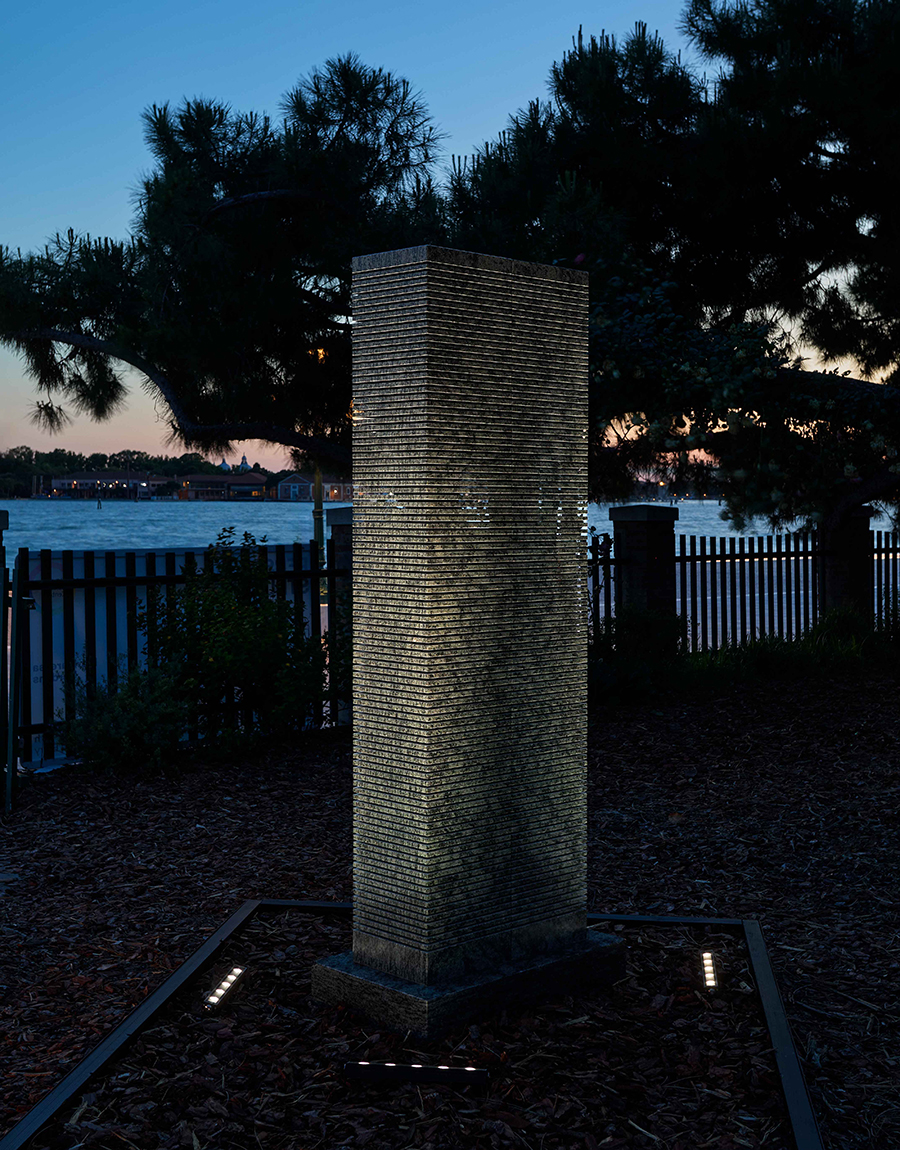
The final artwork along the trail, cell_phone, by Egon Straszer, is a granite sculpture whose apertures and transparencies frame unexpected views of the Venetian lagoon. Here, Neva Mini Pro 7 RGBW narrow-beam fixtures with honeycomb louvres graze the surfaces, emphasising the blades that make up the work and enhancing its material depth.
At the intersections along the route, Pivot B 1.9 fixtures, with wide optics and asymmetrical snoots, light the paths, ensuring precise control of the luminous flux, visual comfort and clear visibility.
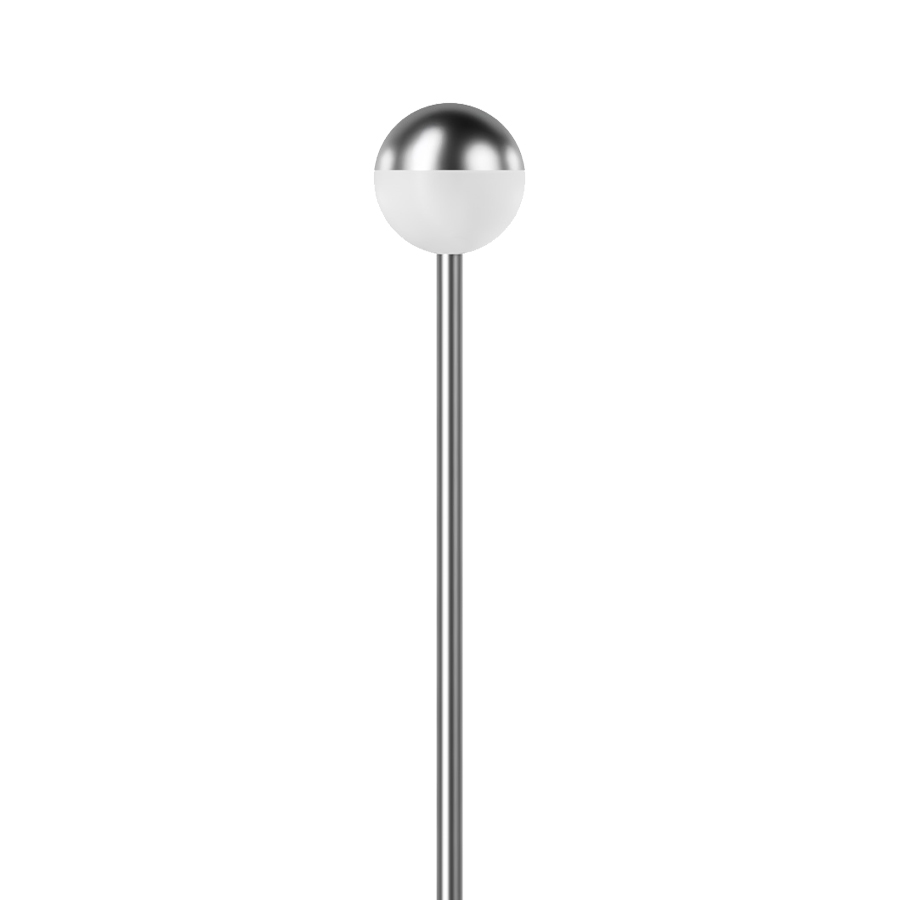
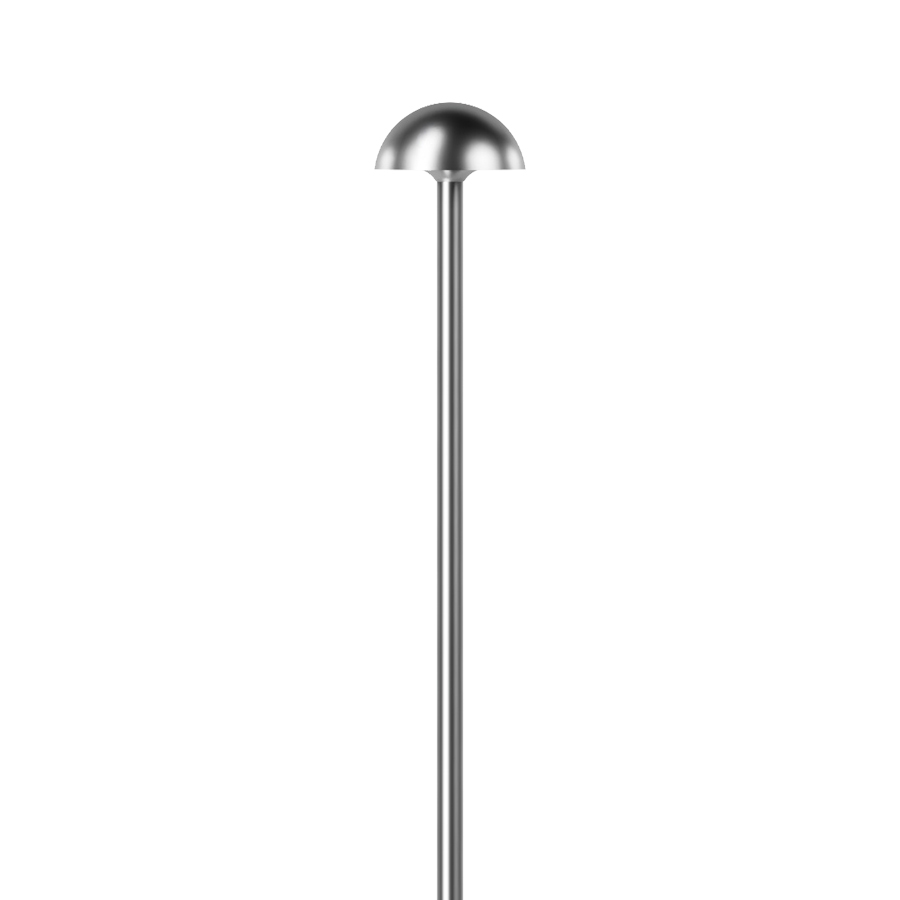
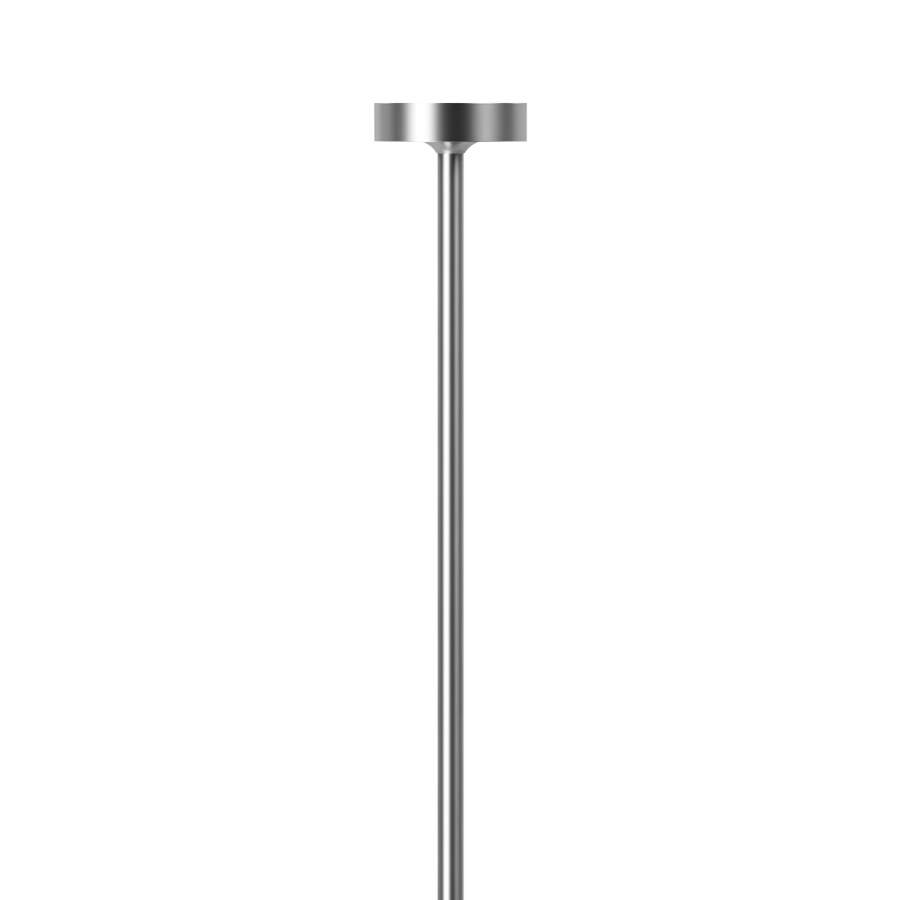
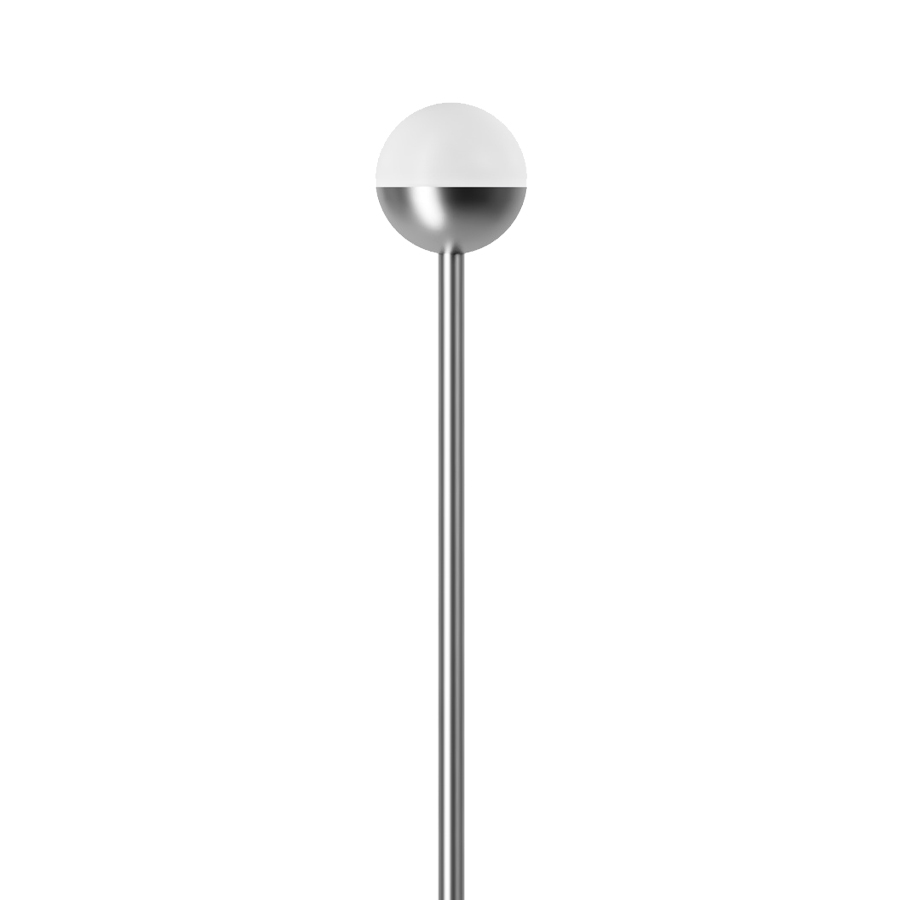
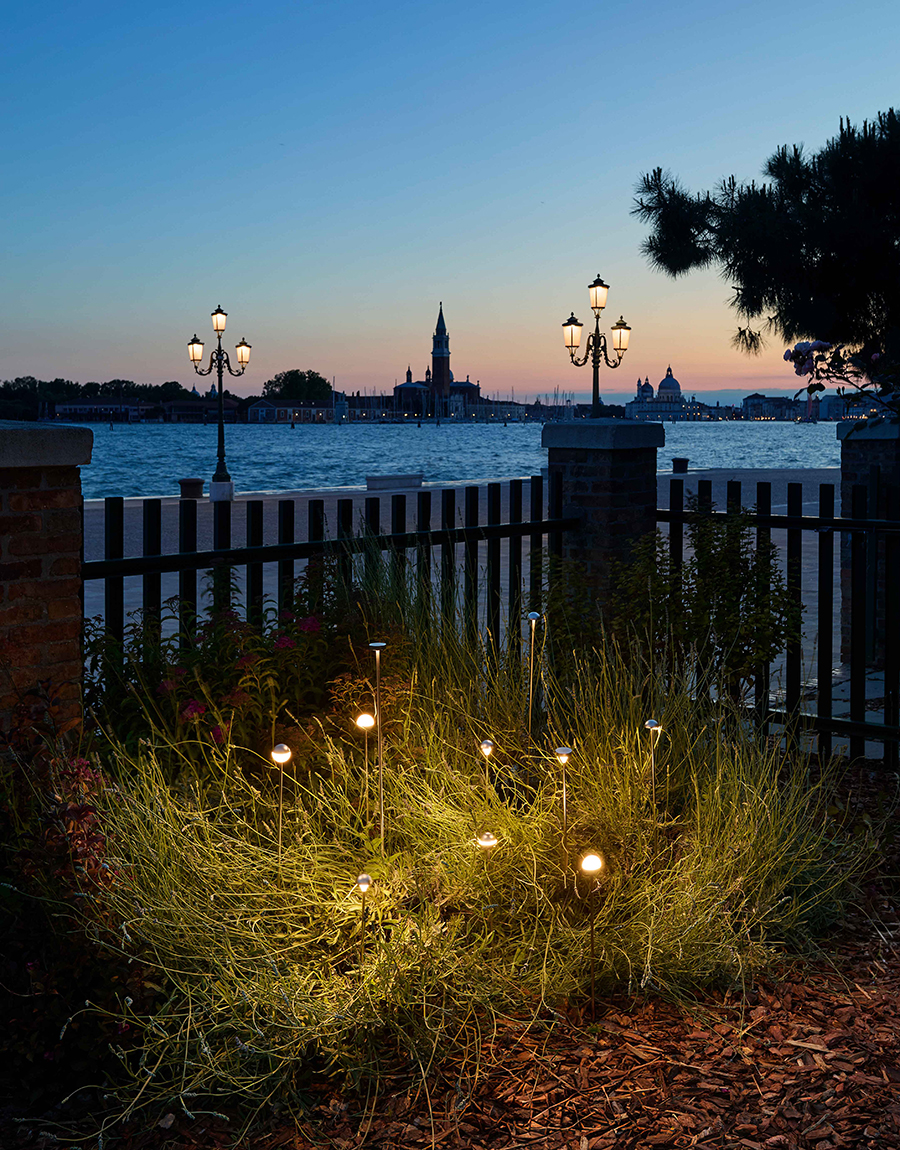
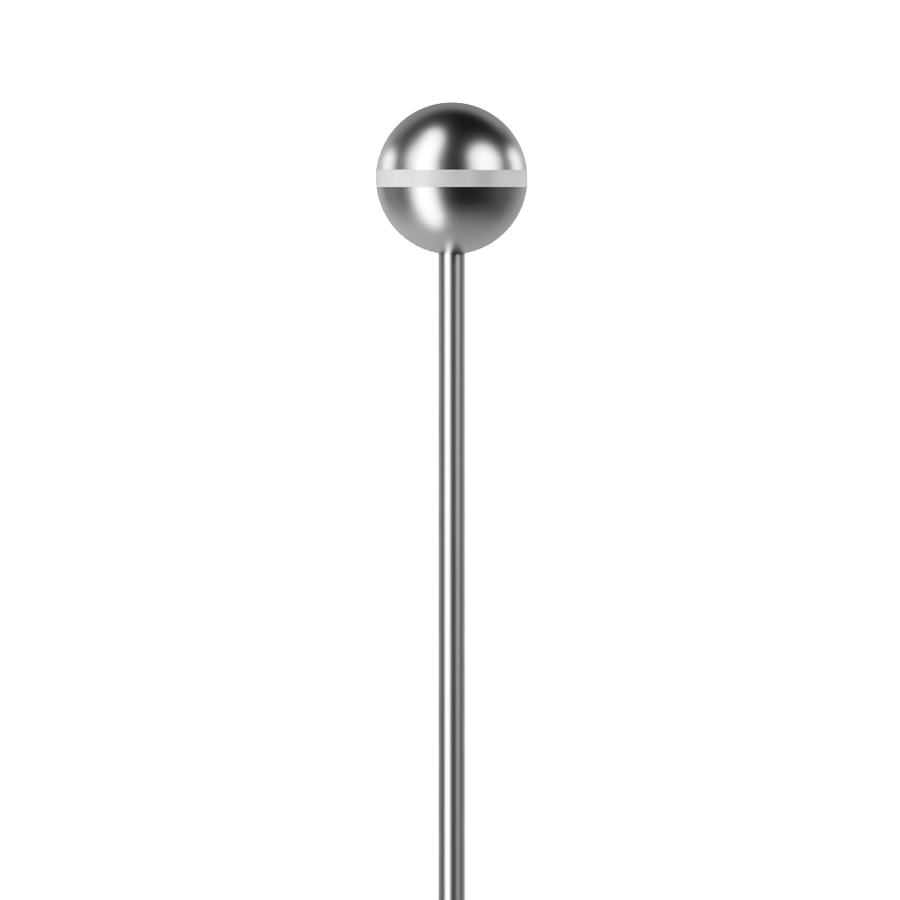
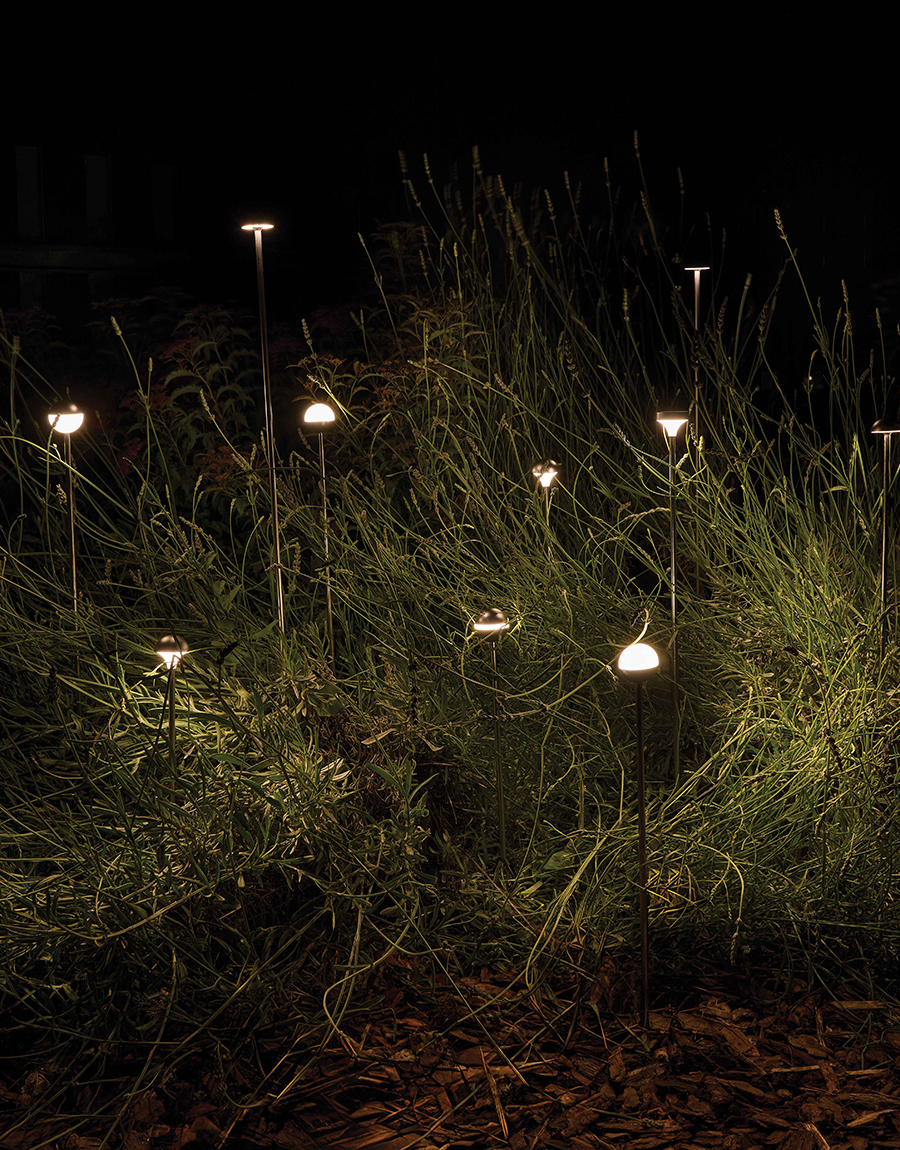
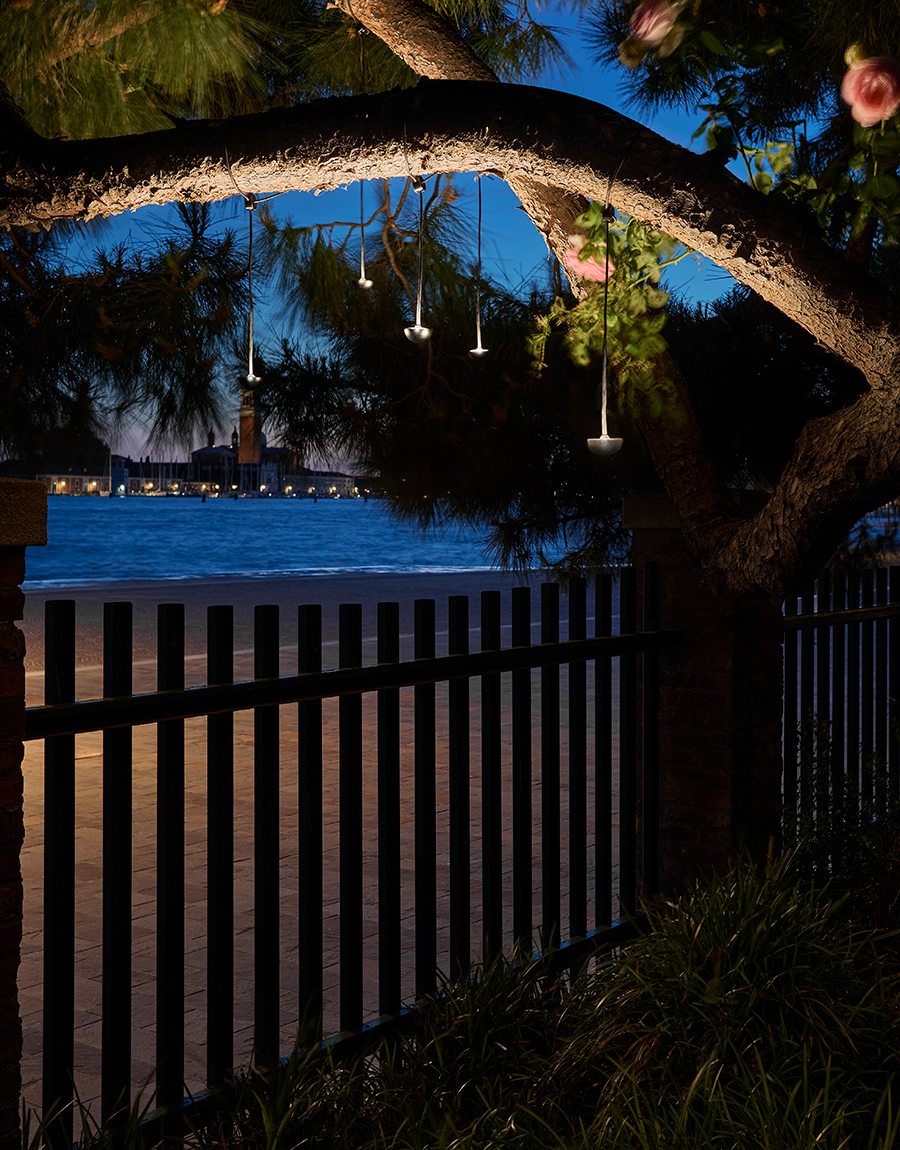
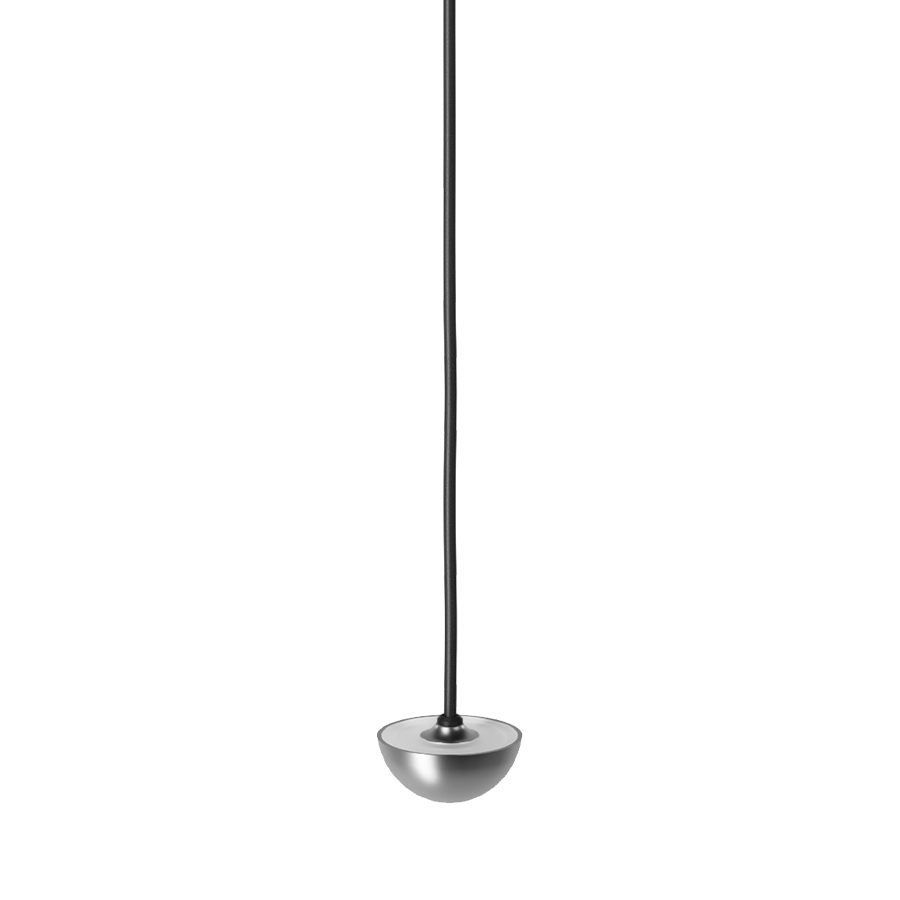
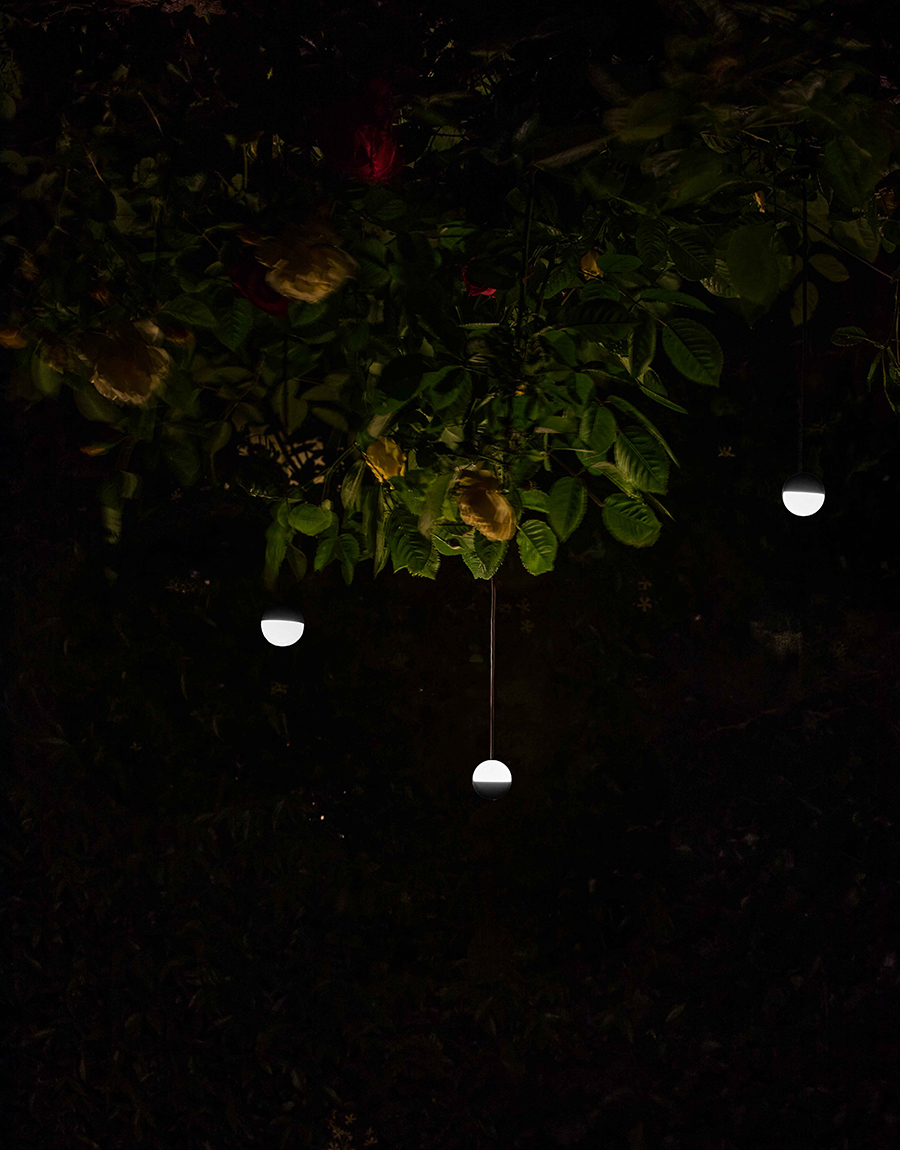
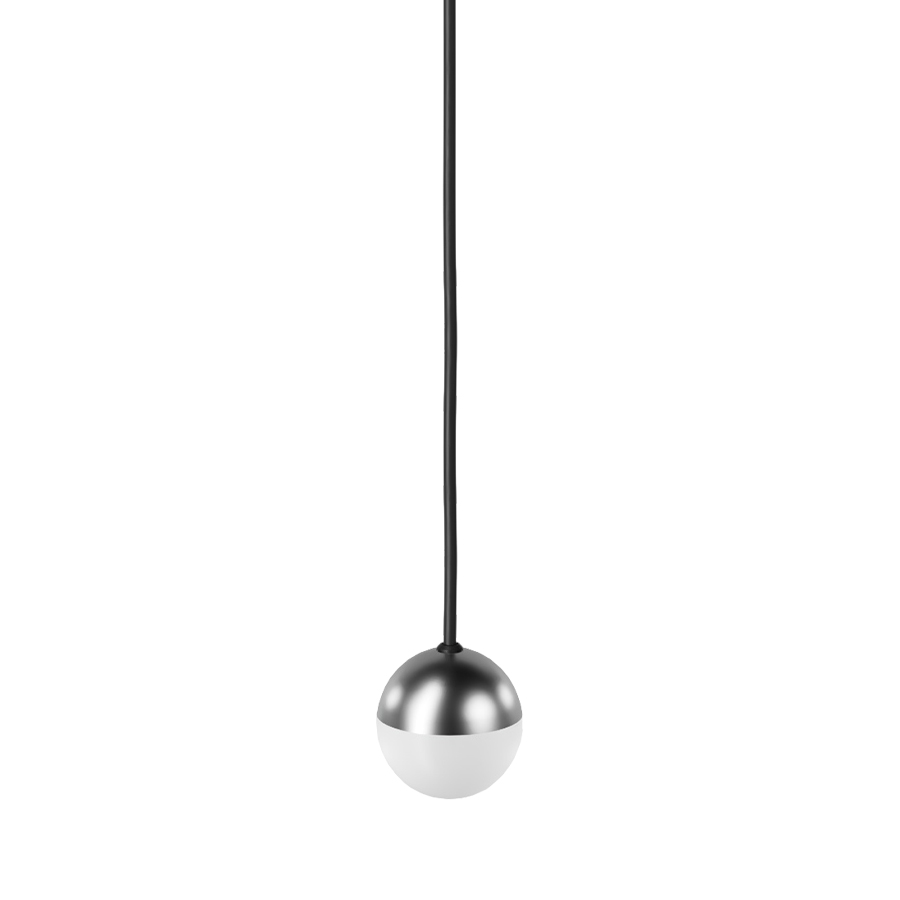
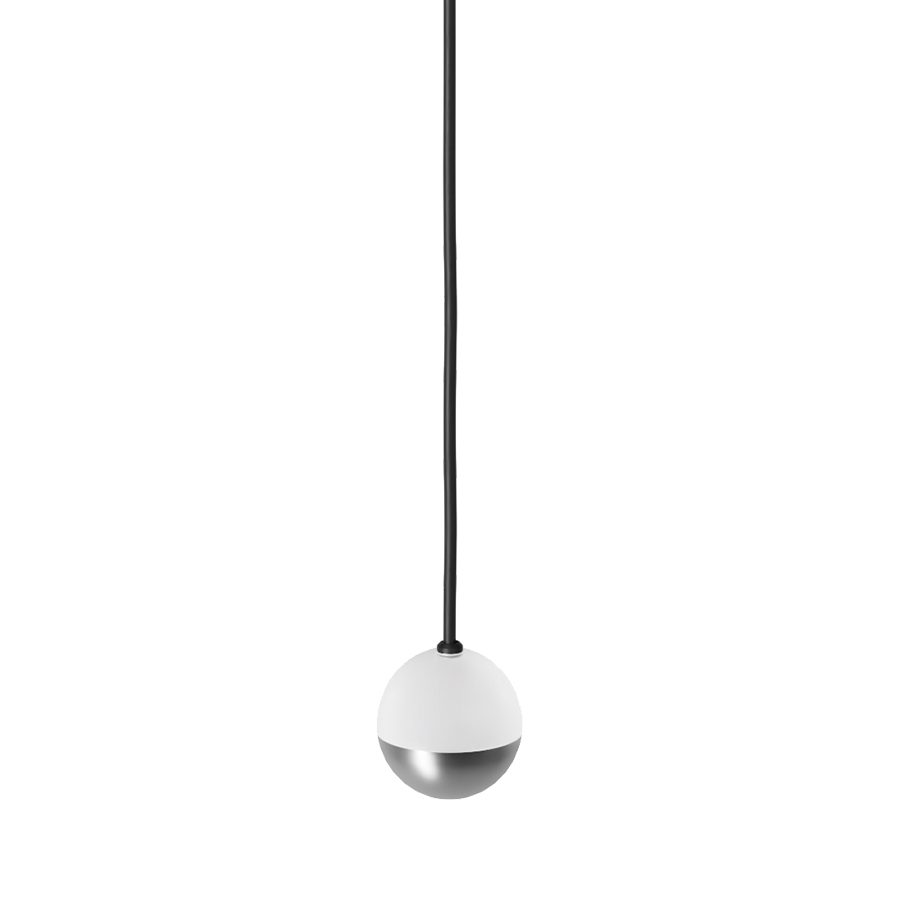
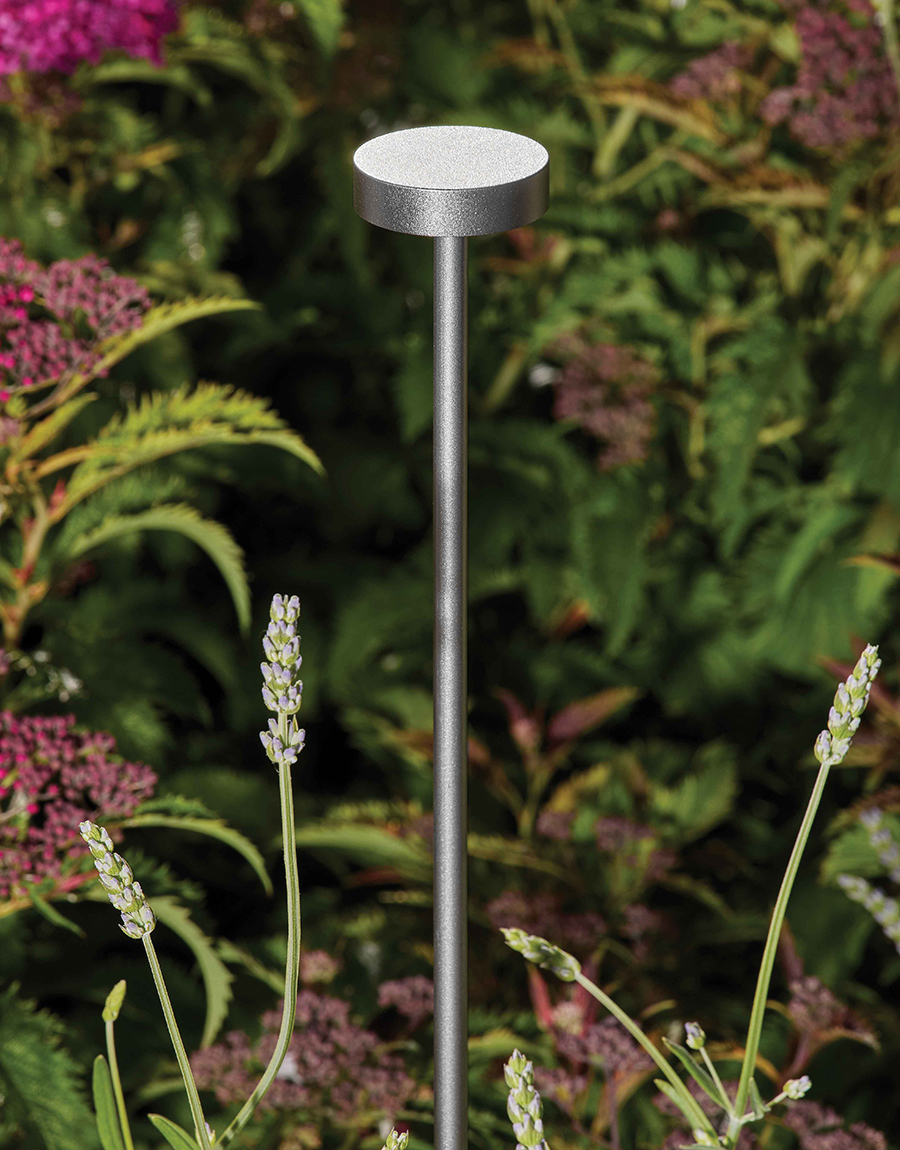
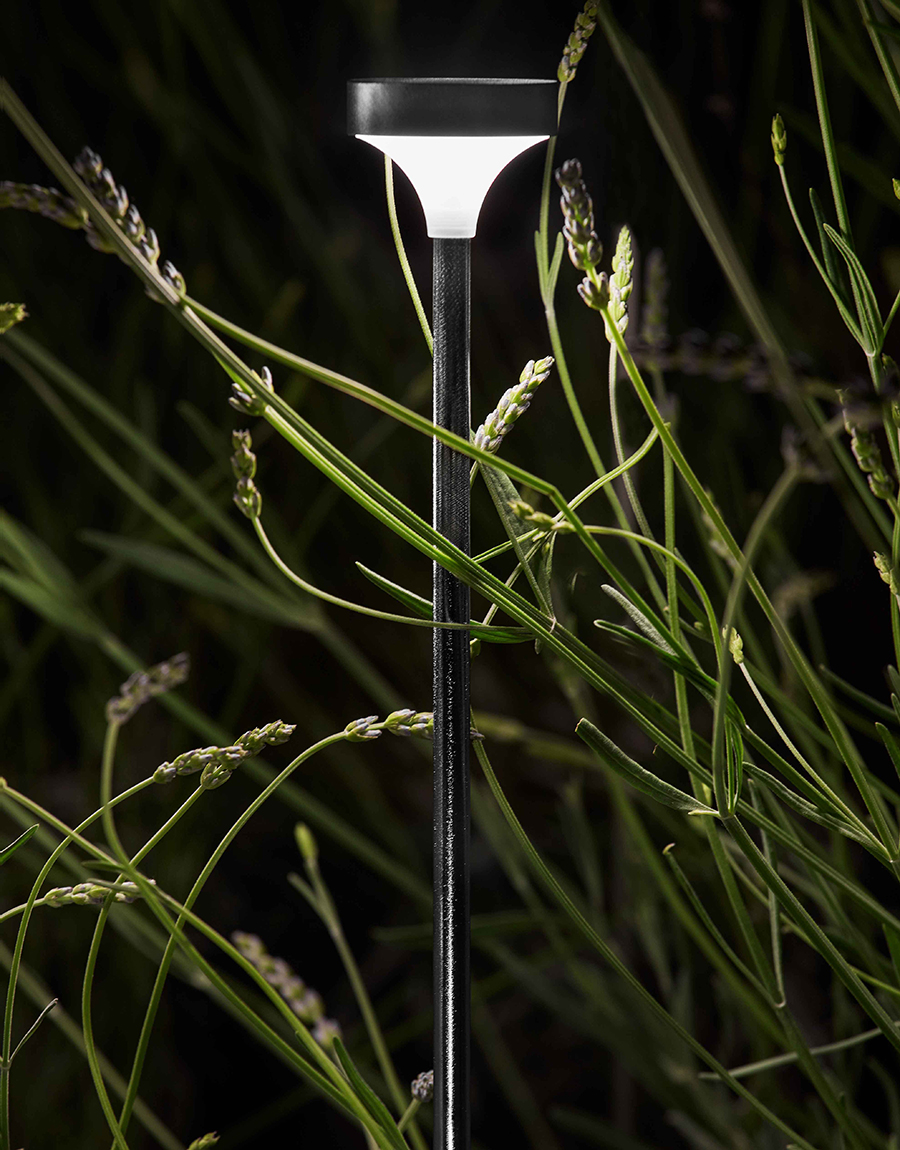
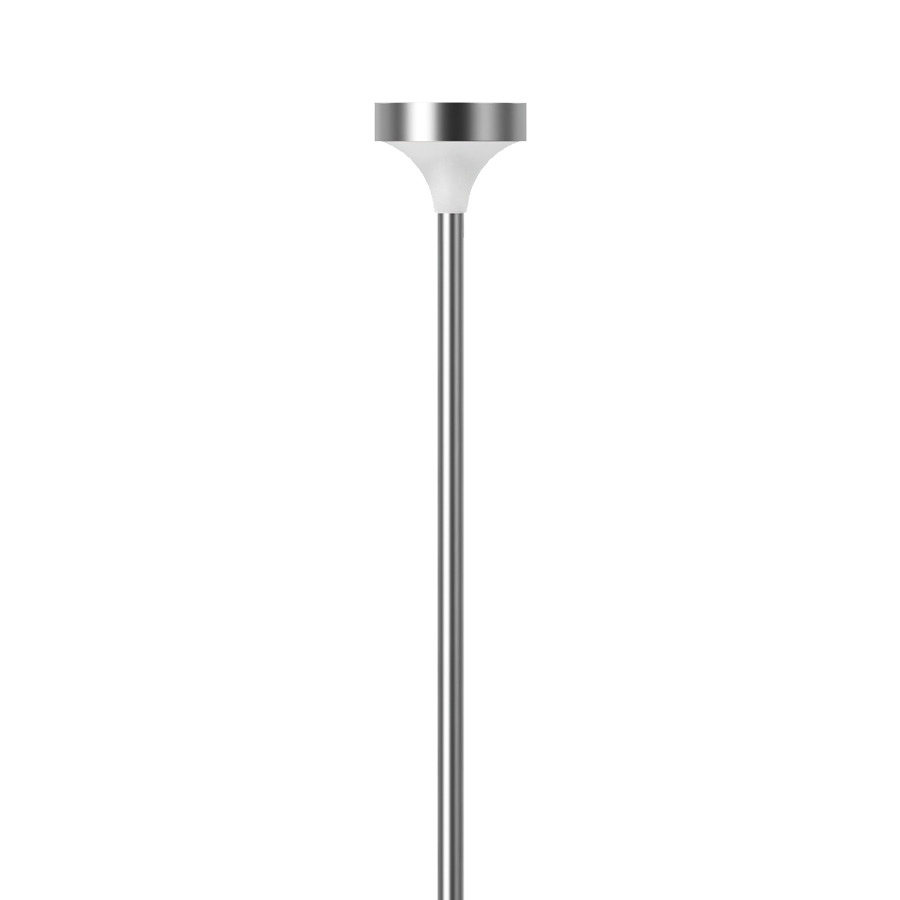
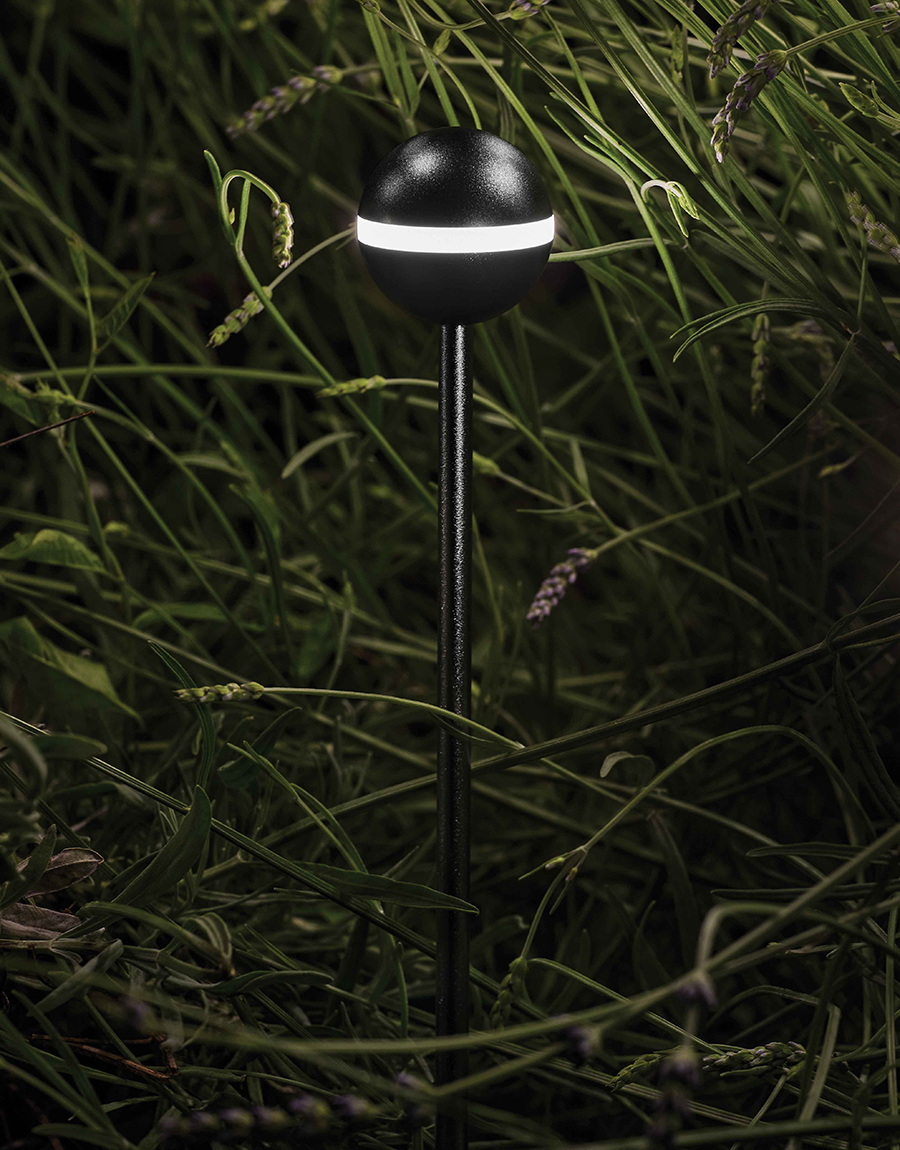
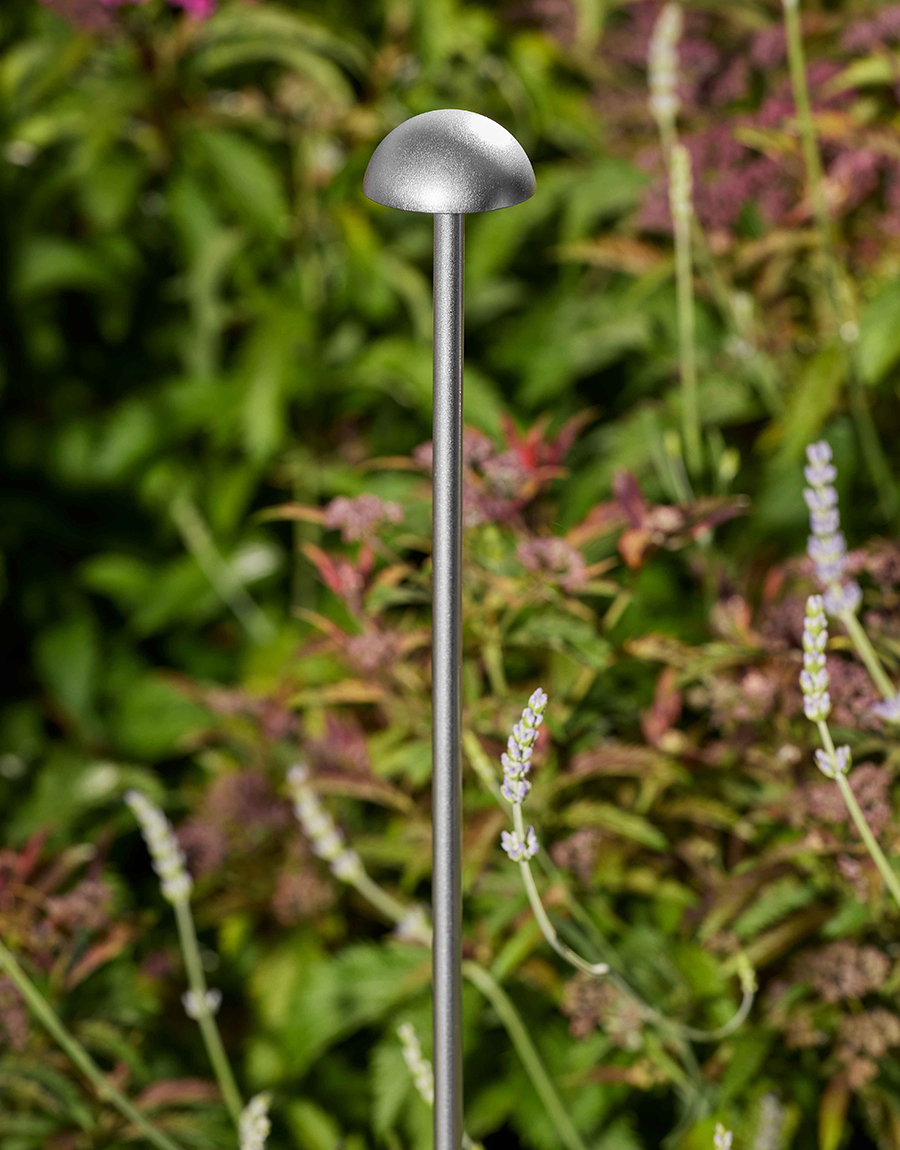
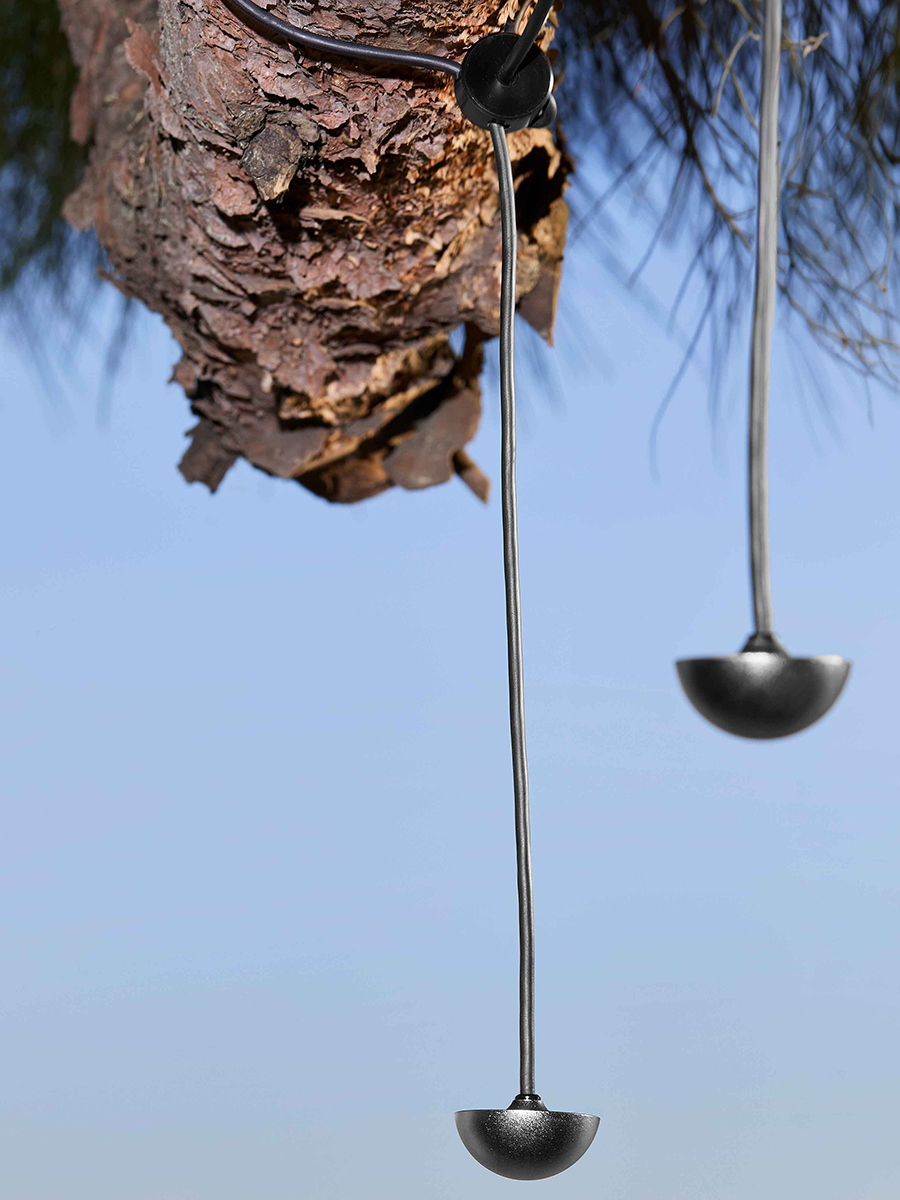
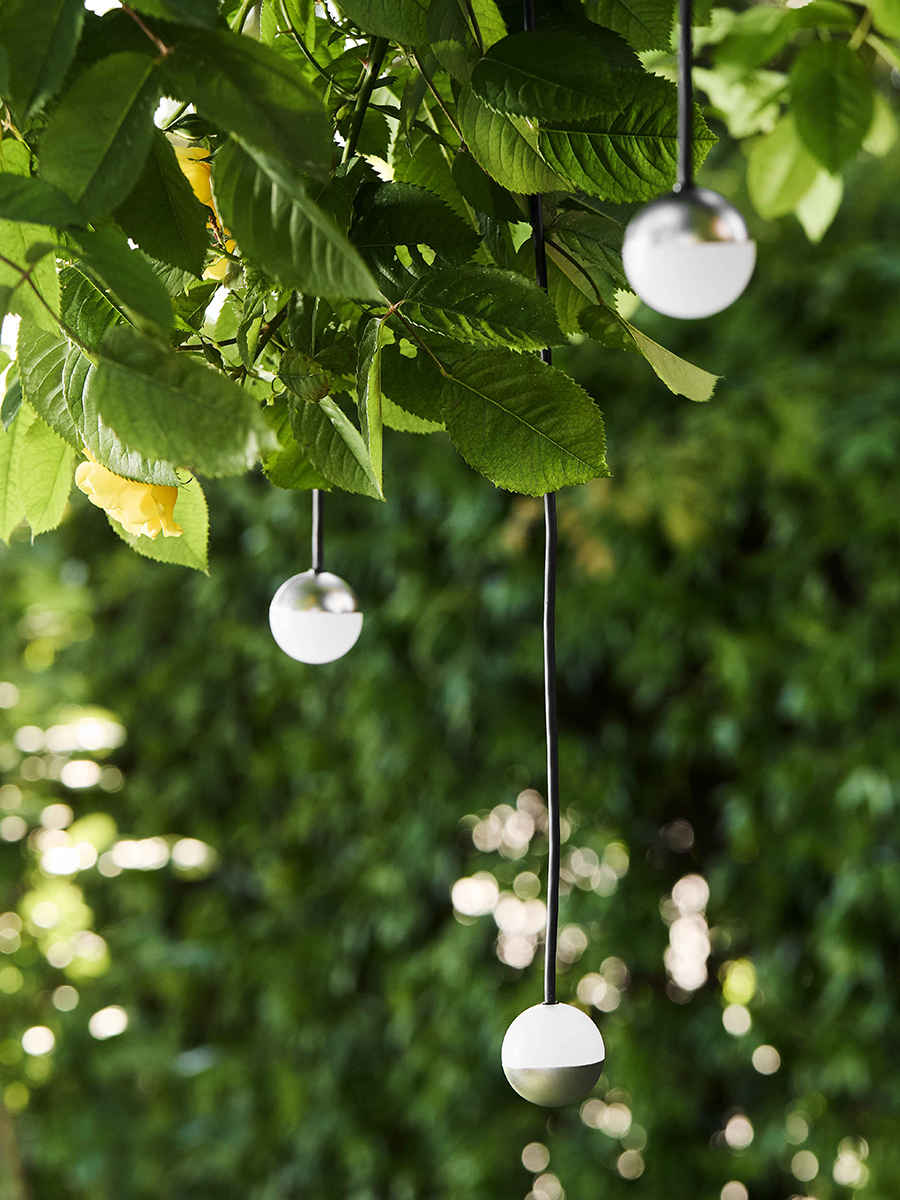
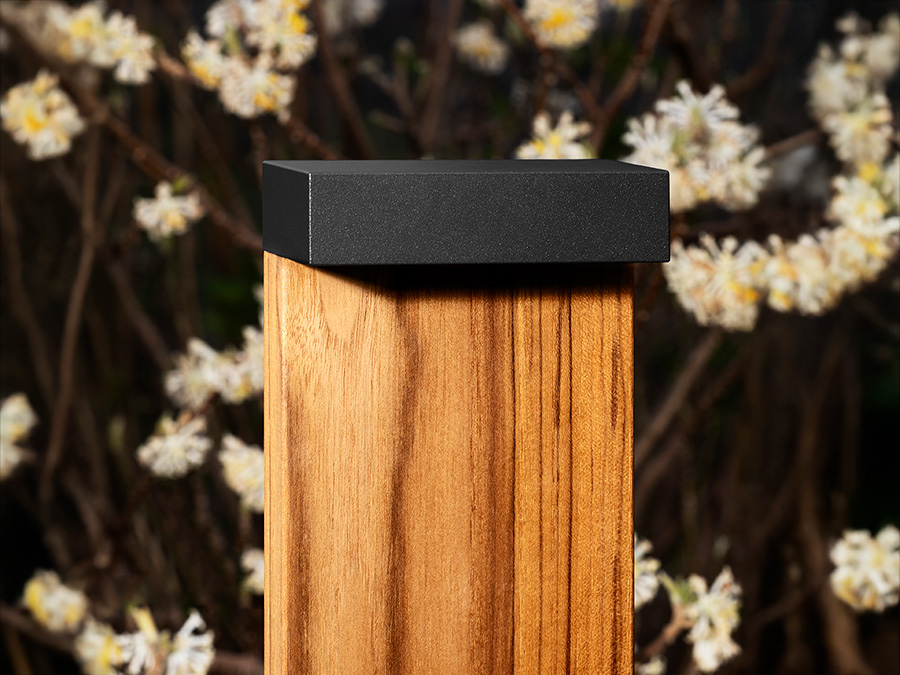
For a special evening event, the all-new DoReMi bollards were positioned among the garden shrubs, creating soft, diffuse lighting at the entrances. Elsewhere, DoReMi S pendants are suspended among maritime pines and climbing roses, creating an ethereal presence that seems almost to float along the paths, strengthening the dialogue between light and vegetation.
This is a project in which light becomes an integral part of the exhibition experience, connecting artworks, landscape and visitors through an immersive, intimate and distinctly contemporary night-time vision.


Milan, Italy
Milan, Italy
 All projects

 All articles